
MRI Infection Control has a problem that no other department faces: most of the equipment used to clean a room is made of steel. Mop buckets, wringers, janitorial carts, and even the clips on a dust mop frame are usually ferromagnetic. Bring any of them into Zone IV and the static magnetic field, which is always on, can pull them toward the bore. This category exists so your environmental services team and technologists can keep the magnet room as clean as any other patient care area without a projectile hazard.

The products here serve MRI technologists, environmental services managers, infection preventionists, and facilities staff responsible for room turnover, terminal cleaning, and between-patient hygiene in the MRI suite. MRI Med is owned and operated by people with more than 80 years of combined MRI experience, which matters here because magnet room cleaning is shaped by safety rules as much as by infection prevention policy.

Why MRI room cleaning needs its own equipment

Why MRI room cleaning needs its own equipment

Under ASTM F2503, items are labeled MR Safe (non-conducting, non-metallic, non-magnetic), MR Conditional (safe under specified conditions such as field strength and spatial gradient), or MR Unsafe. A standard janitorial cart has never been evaluated and should be treated as MR Unsafe, and the same is true of the steel mop bucket in the housekeeping closet. The projectile effect does not care whether the object is a wheelchair or a bucket; either can accelerate toward the scanner with dangerous force.

Environmental services staff, who often float between departments and may have limited MRI safety training, are among the highest-risk groups for projectile incidents. ACR guidance on MR Safety practices calls for controlling Zone III and Zone IV access and screening everything that enters. Non-magnetic janitorial supplies give your cleaning team equipment that stays in the suite, which removes the daily question of whether a hallway cart is safe to bring in.

Infection prevention has its own demands. The table, coils, pads, and headsets touch every patient, and outpatient centers turn a room many times a day. Between-patient cleaning has to be fast, repeatable, and compatible with the materials in the room, which is why MRI cleaning supplies belong in the suite rather than a shared closet.

MRI infection control and cleaning categories

MRI Janitorial & Cleaning Supplies

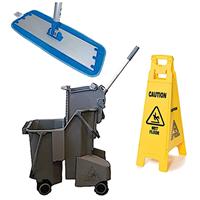
This subcategory covers the equipment environmental services needs to clean Zone IV: non-magnetic mop buckets and wringers, janitorial carts, dust pans, waste receptacles, and related hardware built from aluminum, plastics, and other non-ferrous materials. A dedicated set of cleaning equipment safe for use inside the suite lets terminal cleaning follow the same protocol as other patient rooms. Look for MR Safe or MR Conditional labeling on each item and confirm the conditions match your scanner.

MRI Sanitary Headset Covers

MRI Headsets are worn by nearly every patient for hearing protection and communication, and they sit against the ears and hair for the length of the exam. MRI Sanitary Headset Covers are disposable covers that slip over the ear cups and are changed between patients. They reduce cross-contamination, extend headset life by protecting the cushions from oils and disinfectant wear, and signal to patients that the equipment has been prepared for them.

Sanitary Supplies

General sanitary supplies round out the category with consumables for between-patient hygiene, such as disposable covers, drapes, and dispensers that support your infection prevention program. Stocking them inside the suite keeps technologists from leaving the control area to hunt for supplies between exams.

Cleaning pads, coils, and headsets

Cleaning pads, coils, and headsets

Positioning pads, table pads, and receive coils are high-touch surfaces that are easy to damage with the wrong cleaning method. Foam that absorbs fluid harbors contamination, and coil housings and connectors can be degraded by harsh chemicals. Follow the manufacturer's instructions for use for each item. Pad and coil manufacturers specify which classes of cleaning agents are compatible with their covers and housings, how long a surface should stay wet, and what should never be sprayed onto a connector.

A few habits help. Use pads with sealed, wipeable covers and inspect them for tears that let fluid reach the foam. Wipe coils while disconnected and let them dry before reconnecting. Change headset covers with every patient rather than relying on a wipe-down alone. Keep a written cleaning schedule that separates between-patient wiping from daily and terminal cleaning, and assign each task to a role. MRI Med's MRI Patient Comfort and MRI Imaging Aids categories include pads and headsets with cleanable surfaces.

How to choose MRI Infection Control products

How to choose MRI Infection Control products

Start by mapping who cleans what. Technologists typically handle between-patient wiping of the table, coils, and pads, while environmental services handles floors, waste, and terminal cleaning. Each group needs equipment they can use within their MRI safety training, so janitorial gear that enters Zone IV should be clearly labeled and stored inside the suite.

Next, count your patient volume. High-throughput centers go through headset covers and disposables quickly, so buy in quantities that match your schedule and keep a par level in the control room.

Confirm compatibility with your existing equipment. Headset covers should fit the headsets you own, cleaning products should suit your pads and coils per the manufacturer's instructions, and non-magnetic carts and buckets should fit the storage space you have inside Zone III or IV.

Finally, verify labeling and screen anything new with a test magnet before it enters the magnet room, since even products marketed for MRI can pick up a replaced caster or a steel screw. MRI Med carries test magnets and ferromagnetic detection tools in its MRI safety category.

Why order MRI Infection Control Supplies from MRI Med

Why order MRI Infection Control Supplies from MRI Med

MRI Med designs, manufactures, and distributes products for the MRI imaging market from California, and the team has spent their careers in MRI product development and understand that products are needed so that cleaning and safety can coexist. The products here are selected for the realities of Zone IV: non-ferrous construction, cleanable materials, and consumables sized for imaging workflows. Support staff can help you build a starter set of non-magnetic janitorial supplies, standardize headset covers across locations, or replace an item that failed a magnet check. If you need help selecting products, call or email MRI Med and a knowledgeable representative will assist.

Frequently Asked Questions

Can you bring a regular mop bucket into an MRI room?

No. Standard mop buckets, wringers, and janitorial carts contain steel and have not been evaluated for the MR environment, so they should be treated as MR Unsafe. The static field is always on, and a ferromagnetic bucket can become a projectile. Use non-magnetic janitorial supplies that are labeled MR Safe or MR Conditional and are kept inside the suite.

What is MRI Infection Control?

MRI infection control is the set of practices and supplies used to prevent cross-contamination in the MRI suite: cleaning the table, coils, and pads between patients, covering headsets, managing waste, and performing terminal cleaning. It differs from other departments because the cleaning equipment itself must be non-ferrous to be used safely in Zone IV.

Why do MRI Headsets need disposable covers?

MRI headsets rest against every patient's ears and hair for the length of an exam, and they are not easy to fully disinfect between scans. Disposable sanitary headset covers create a barrier that is replaced with each patient, reducing cross-contamination, protecting the ear cushions from wear, and showing patients the equipment has been prepared for them.

 How do you clean MRI coils and positioning pads?

Follow the manufacturer's instructions for use for each coil and pad. IFUs specify compatible cleaning agent classes, contact time, and what to keep away from connectors. In general, wipe coils while disconnected and let them dry before use, and use pads with sealed covers so fluid never reaches the foam. Inspect covers regularly and replace damaged items.

Who is responsible for cleaning the MRI room?

Responsibility is usually shared. Technologists handle between-patient wiping of the table, coils, pads, and headsets, while environmental services handles floors, waste, and terminal cleaning. Because environmental services staff often float between departments, they need MRI safety training and dedicated non-magnetic equipment that stays in the suite.

Are MRI cleaning supplies MR Safe or MR Conditional?

It depends on the item. Fully non-metallic products such as plastic dust pans may be MR Safe, while items with non-ferrous metal components are often MR Conditional. Read the label on each product and confirm the stated conditions match your scanner's field strength. When in doubt, screen the item with a test magnet before it enters Zone IV.

How often should an MRI room be cleaned?

High-touch surfaces such as the table, coils, pads, and headsets should be cleaned between every patient. Floors, waste, and general surfaces are typically addressed daily, with terminal cleaning on a schedule set by your infection prevention policy. Document the schedule so both technologists and environmental services know which tasks belong to them.