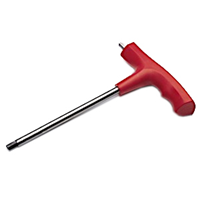



Titanium is non-ferromagnetic, which is why it is the material of choice for MRI compatible Surgical Instruments. MRI Med carries titanium instruments for procedure suites and iMRI environments where scissors, forceps, and needle holders need to stay in the room while the patient is imaged. Titanium also produces far less artifacts than steel.
MRI-guided biopsy, especially breast biopsy, relies on real-time imaging to target lesions that are not visible on mammography or ultrasound. This subcategory covers the supplies that support biopsy workflows in the magnet room, where artifact-producing metal near the target can compromise accuracy.
Single-use instruments built for MRI reduce reprocessing burden and remove any question about whether a reusable tray has been restocked with a ferromagnetic substitute.
Gadolinium-based contrast administration requires syringes, tubing, connectors, and related consumables that work with your injector and can be handled at the table. This subcategory keeps those accessories stocked alongside the rest of your MRI procedure supplies.
A conventional laryngoscope combines a ferromagnetic handle with steel batteries and a conductive lamp circuit. MRI laryngoscopes use non-ferrous construction with MR Conditional batteries and lighting so anesthesia providers can intubate at the bedside rather than moving the patient out of the room. Verify the labeled field strength before adding one to your airway cart.
Patients under general anesthesia or in critical condition need ventilation that continues in the scanner. MRI Ventilators are designed for the MR environment and carry MR Conditional labeling with placement and field-strength limits. Pair them with MRI equipment stands so the ventilator sits at a defined distance from the bore.
ECG electrodes for MRI use carbon or other non-ferrous leads to reduce heating and burn risk and to limit artifact. MRI Stethoscopes let anesthesia staff auscultate in the room without a ferromagnetic chest piece. Both are small, easy to overlook, and easy to swap for an unsafe equivalent if the drawer is not clearly labeled.
Gas delivery and suction inside the magnet room depend on regulators and flowmeters built without ferromagnetic components. They attach to wall outlets or non-ferrous cylinders and support oxygen therapy, anesthesia, and airway suction. MRI Med also carries the MRI Du-O-Vac Series, a suction and vacuum-related product line for the MR environment.
Chrome-plated steel IV poles have caused serious projectile incidents. MRI IV poles are built from non-ferrous materials so infusions can run in Zone IV, and MRI equipment stands do the same job for monitors, pumps, and ventilators.
A mayo stand holds the instruments in active use, and an instrument table holds the rest of the setup. Non-ferrous MRI Mayo Stands and Instrument Tables roll into the magnet room without becoming a hazard, so your team can keep a normal surgical setup within reach.
Procedure lighting in the magnet room must avoid ferromagnetic housings and must not introduce RF interference that degrades image quality. MRI Lighting products give interventional teams task illumination that is appropriate for Zone IV.


No. Standard stainless steel surgical instruments are typically ferromagnetic and can become projectiles near the magnet. They also produce significant image artifacts. Procedures performed in Zone IV require MRI Surgical Instruments, most often titanium, with MR Safe or MR Conditional labeling that matches your scanner's field strength.
Titanium is non-ferromagnetic, so it is not pulled toward the bore and does not experience the torque that steel does. It also produces much less susceptibility artifact, which keeps the image usable when instruments are near the target anatomy. Always confirm the specific instrument's labeling rather than assuming every titanium product is unconditionally safe.
Because a laryngoscope contains a battery and a light source, it is almost always labeled MR Conditional rather than MR Safe. The label will specify the field strength and other conditions under which it can be used. Check those conditions against your scanner and keep the laryngoscope on a clearly marked MRI airway cart.
It should not. Most conventional IV poles are chrome-plated steel and have been involved in documented projectile incidents. MRI IV poles are built from non-ferrous materials so infusions can continue in Zone IV. Label them clearly and store them separately so they are not mixed with general-floor equipment.
Oxygen and suction in Zone IV run through MRI flowmeters, oxygen regulators, and vacuum regulators built without ferromagnetic parts. These connect to wall outlets or non-ferrous cylinders. Suction-related products such as the MRI Du-O-Vac Series support airway clearance during procedures without introducing a projectile risk.
An MR Conditional label lists the specific conditions under which an item has been evaluated, including static field strength and spatial gradient. A product cleared for 1.5T has not necessarily been evaluated at 3T, where forces and heating can be greater. Match the label to your scanner before bringing any MRI procedure supplies into the room.