

Item Number: SKU:MC-219
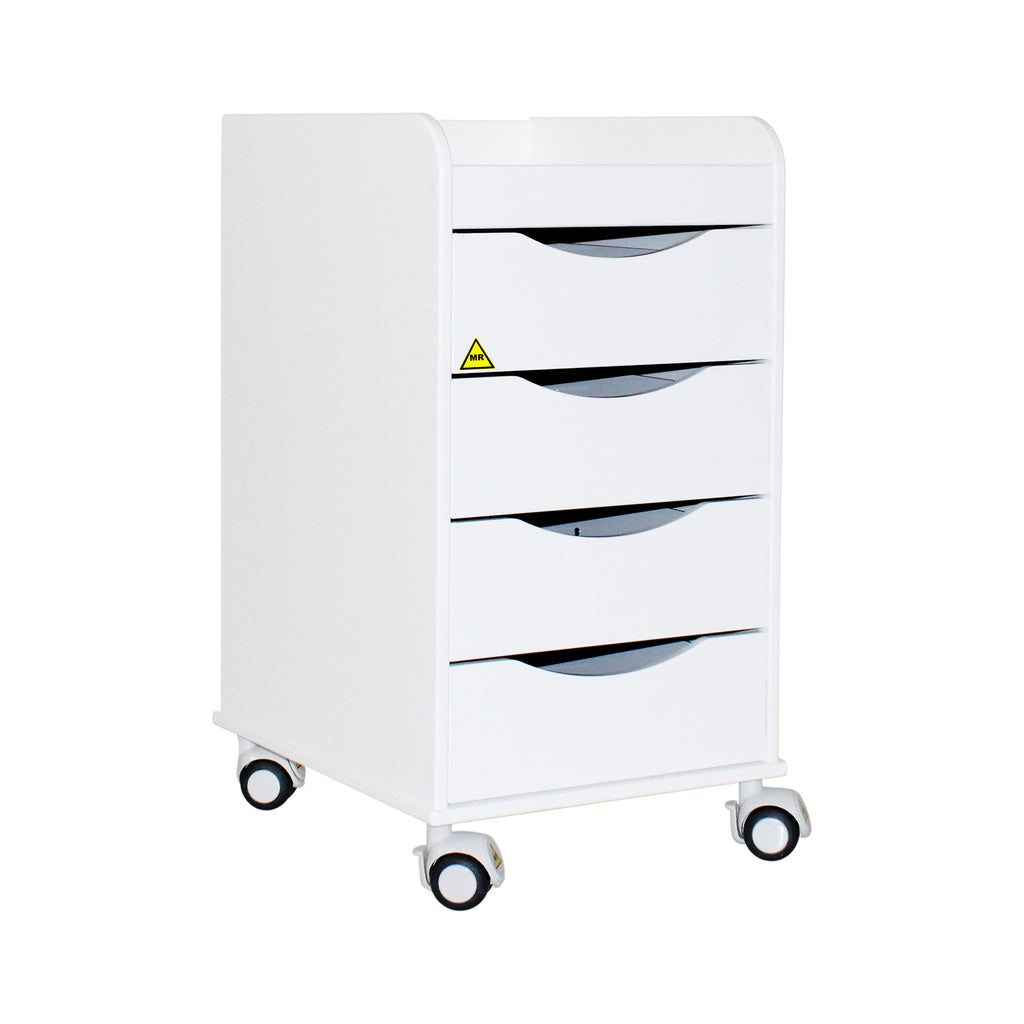
MRI Compact Cart
MRI Compact Cart
 What does this mean?

MR Safe – an item that poses no known hazards in all MRI environments. Using the terminology, “MR Safe” items are non-conducting, non-metallic, and non-magnetic items such as a plastic Petri dish. An item may be determined to be MR Safe by providing a scientifically based rationale rather than test data.

MR Conditional – an item that has been demonstrated to pose no known hazards in a specified MR environment with specified conditions of use. “Field” conditions that define the MR environment include static magnetic field strength, spatial gradient magnetic field, dB/dt (time rate of change of the magnetic field), radio frequency (RF) fields, and specific absorption rate (SAR). Additional conditions, including specific configurations of the item (e.g., the routing of leads used for a neurostimulation system), may be required.

MR Unsafe – An item that is known to pose hazards in all MRI environments. MR Unsafe items include magnetic items such as a pair of ferromagnetic scissors.
The MRI Compact Cart delivers efficient mobile storage and workspace functionality for MRI suites, imaging centers, and healthcare environments where durability and organization are essential. Designed with a compact footprint and smooth mobility, this versatile cart keeps critical supplies secure, accessible, and easy to transport throughout demanding clinical settings.
Features:
- Durable, non-metal HDPE construction resists chemicals, rust, and impact damage
- Five, spacious storage areas keep supplies organized and within reach
- Compact, mobile design maximizes workspace efficiency in MRI suites and labs
- Smooth-rolling casters provide excellent maneuverability and stability
- Easy-clean surfaces support infection control and routine sanitization
- Ideal for MRI suites, imaging centers, and healthcare facilities
- MR Conditional to 3T
Overall Dimensions:
- 17.50"L x 14.25"W x 26.00"H
- 42 lbs
Couldn't load pickup availability
Frequently Asked Questions
Additional Resources

Innovations in MR Conditional Transport Devices (2025 Trends)

Avoiding MRI Suite Accidents During Patient Transfers: Best Practices

Case Study: MRI Transport Efficiency in a Mid-Size Hospital

MR Conditional Wheelchairs vs. Stretchers: Which Is Right for You?

How to Design an MRI Suite Transport Workflow: Step-by-Step Guide

MRI Patient Transport Solutions: Safe and Efficient Options

What Hospitals Get Wrong About MR Safe Equipment

MRI Safety Standards for Medical Equipment in 2025

MR Zones I-IV: Equipment Guidelines You Must Know

ASTM F2503: What It Means for MRI Equipment Buyers

Understanding MR Safe, MR Conditional, and MR Unsafe Labels

How to Choose MR Safe Equipment: Compliance, Safety, and Zones

The Science Behind Non-Ferromagnetic Medical Devices

How to Identify Non-Magnetic Hospital Equipment (Even Without Labels)

MRI Zone IV: What Equipment Is Allowed?

Why Non-Magnetic Materials Matter in Radiology Departments

Complete List of Non-Magnetic, MR Conditional Equipment for MRI Suites

Non-Magnetic, MR Conditional Medical Equipment for MRI Suites

How to Maintain MR Conditional Stretchers for Long-Term Use

Why MR Conditional Stretchers Are Non-Magnetic – Explained

MR Conditional Stretchers vs. Standard Stretchers: What's the Difference?

What Makes a Stretcher MR Conditional?
![Top 5 MR Conditional Stretchers in 2025 [With Pricing]](http://mrimed.com/cdn/shop/articles/stretcher_4c722130-1b4c-4da0-a584-143b056d7b2a.jpg?v=1780666916&width=400)
Top 5 MR Conditional Stretchers in 2025 [With Pricing]

MR Conditional Stretchers: The Complete Buyer’s Guide

MRI Wheelchair FAQs: Everything You Need to Know

Cleaning & Maintaining Your MRI Wheelchair: Best Practices

What Does “MR Conditional” Mean?

Top 5 Mistakes to Avoid When Buying an MRI Wheelchair

MRI Wheelchair Safety Guide: Checklist, Zones & Training

Comparing MRI Wheelchairs: Which is Right for You?

Bariatric MRI Wheelchairs: Features, Safety, and Sizing Guide

MRI Wheelchair Accessories: What You Need and Why

How to Choose the Right MRI Wheelchair for Your Facility

Understanding MRI Wheelchairs

Selecting MRI Equipment for Modern Medical Facilities: A Comprehensive Guide

A Buyer’s Guide to Cost-Effective MRI Supplies Without Compromising Quality
