
Skip to product information
1 of 5

Item Number: SKU:NF-125

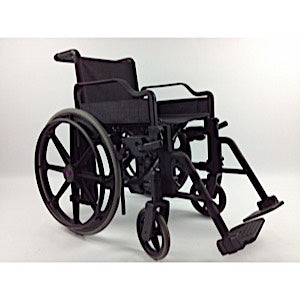
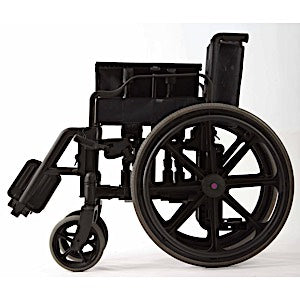
18" MRI Safe Wheelchair

18" MRI Safe Wheelchair

Regular price $895.00
Regular price Sale price $895.00
MR Safe What does this mean?

MR Safe – an item that poses no known hazards in all MRI environments. Using the terminology, “MR Safe” items are non-conducting, non-metallic, and non-magnetic items such as a plastic Petri dish. An item may be determined to be MR Safe by providing a scientifically based rationale rather than test data.

MR Conditional – an item that has been demonstrated to pose no known hazards in a specified MR environment with specified conditions of use. “Field” conditions that define the MR environment include static magnetic field strength, spatial gradient magnetic field, dB/dt (time rate of change of the magnetic field), radio frequency (RF) fields, and specific absorption rate (SAR). Additional conditions, including specific configurations of the item (e.g., the routing of leads used for a neurostimulation system), may be required.

MR Unsafe – An item that is known to pose hazards in all MRI environments. MR Unsafe items include magnetic items such as a pair of ferromagnetic scissors.

Sale Sold out
Shipping calculated at checkout.

The 18-inch MRI wheelchair is a specialized mobility solution designed to meet the stringent requirements of MRI environments. Manufactured entirely from non-magnetic materials, this wheelchair ensures safe operation within all MRI facilities, adhering to strict regulatory and safety standards. Its robust construction offers long-lasting durability, while user-focused features, such as ergonomic seating and smooth maneuverability, provide unparalleled convenience for patients and healthcare professionals. Offering a weight capacity of 200 pounds, this wheelchair is an essential addition to any collection of MRI equipment, streamlining patient care and optimizing the efficiency of medical procedures.

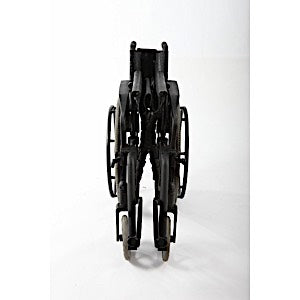
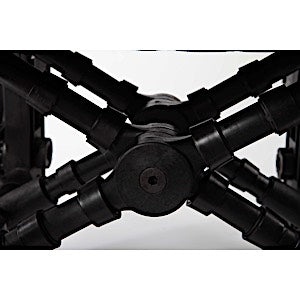
Engineered with sustainability and functionality in mind, the wheelchair is crafted from 100% recyclable plastic, ensuring compatibility with ferrous detection systems. Key features include a foldable design for easy storage and transport, push-to-lock wheel locks for enhanced stability, and full compliance with FDA 510(k) standards as well as CE and TUV certifications. Backed by a one-year frame warranty and a three-month warranty on soft and moving components, this wheelchair is MR Safe, making it suitable for all MRI environments. Both eco-conscious and reliable, it represents a superior choice within MRI products.


Overall Dimensions:

  • Seat Width: 18"
  • Overall Width: 26"
  • Seat Depth: 16"
  • Overall Depth: 34"
  • Back Height: 18"
  • Overall Height: 36"
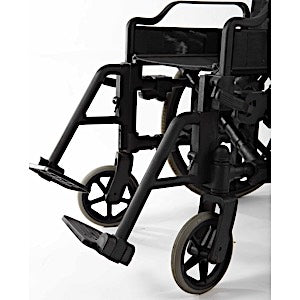
  • Front Casters: 8"
  • Rear Wheels: 24" solid
  • Weight: 30 pounds (with footrests)

Note: Available in 18” and 20” widths with load capacities ranging from 200-220 pounds

View full details

Frequently Asked Questions

1. What makes this 18-inch wheelchair a good choice for facilities that need a fully non-magnetic option for MRI transport?

This model is built entirely from non-magnetic materials, so it can be used safely anywhere in the MRI suite, including areas closest to the bore. Facilities choose it when they want a lightweight, all-plastic MRI wheelchair that eliminates the risk of ferromagnetic pull and reduces the need for repeated safety checks. It’s especially useful in high-turnover outpatient centers that want something simple, durable, and easy to move between Zones II–IV.

2. How does a plastic MRI wheelchair compare to a standard metal-frame MR Conditional wheelchair?

Plastic MRI wheelchairs like this one are lighter, easier to maneuver, and require less maintenance because there are no metal components that can corrode or loosen over time. For facilities that only need to move smaller patients or those with good sitting balance, an 18-inch plastic wheelchair is often more efficient than a heavy-duty metal-frame option. It also passes cleanly through ferromagnetic detection systems, which helps streamline patient screening.

3. Is an 18-inch MRI wheelchair wide enough for most outpatient imaging patients?

Most imaging centers find the 18-inch width works well for average-sized adults, especially in ambulatory settings or when patients can transfer with minimal assistance. It’s a practical “daily-use” size for MRI prep rooms and waiting areas. For facilities that routinely scan larger patients, the 20-inch version or a bariatric MRI wheelchair may be a better fit.

4. How does the foldable design help with MRI workflow and storage in smaller suites?

Because this wheelchair folds down quickly, it’s easy to store in tight MRI control rooms, hallways, or equipment alcoves. Many departments keep two or three folded units on hand for peak times. The lightweight plastic frame also makes it simple for staff to move the chair out of the room before scanning, which matters if you’re tight on space or working in an older MRI suite with narrow doorways.

5. What kind of cleaning and maintenance does a non-magnetic plastic MRI wheelchair require?

Day-to-day care is minimal. The plastic construction handles standard hospital disinfectants well, and there are no metal components that need lubrication or rust-prevention. Weekly checks of the push-to-lock brakes, rear wheels, and footrest pins are usually enough. Most facilities like this design because it holds up well in high-cleaning environments and doesn’t require specialized parts or service calls.

Additional Resources

Innovations in MRI-Conditional Transport Devices (2025 Trends)

Innovations in MRI-Conditional Transport Devices (2025 Trends)

The landscape of MRI patient transport is evolving rapidly. Hospitals and imaging centers are pri...
Read more
Avoiding MRI Suite Accidents During Patient Transfers: Best Practices

Avoiding MRI Suite Accidents During Patient Transfers: Best Practices

Patient safety is the top priority in MRI suites. Accidents during patient transfers can lead to ...
Read more
Case Study: MRI Transport Efficiency in a Mid-Size Hospital

Case Study: MRI Transport Efficiency in a Mid-Size Hospital

Efficient MRI patient transport is critical for patient safety, scanner throughput, and overall w...
Read more