
Skip to product information
1 of 1

Item Number: SKU:PA-215

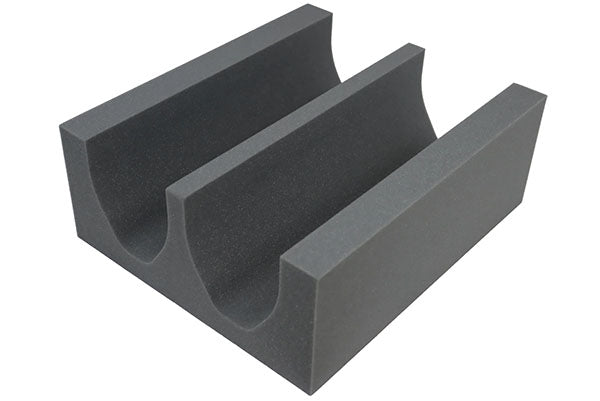
Dual Leg Immobilizer

Dual Leg Immobilizer

Regular price $124.00
Regular price Sale price $124.00
MR Safe What does this mean?
MR Safe

MR Safe – an item that poses no known hazards in all MRI environments. Using the terminology, “MR Safe” items are non-conducting, non-metallic, and non-magnetic items such as a plastic Petri dish. An item may be determined to be MR Safe by providing a scientifically based rationale rather than test data.

MR Conditional

MR Conditional – an item that has been demonstrated to pose no known hazards in a specified MR environment with specified conditions of use. “Field” conditions that define the MR environment include static magnetic field strength, spatial gradient magnetic field, dB/dt (time rate of change of the magnetic field), radio frequency (RF) fields, and specific absorption rate (SAR). Additional conditions, including specific configurations of the item (e.g., the routing of leads used for a neurostimulation system), may be required.

MR Unsafe

MR Unsafe – An item that is known to pose hazards in all MRI environments. MR Unsafe items include magnetic items such as a pair of ferromagnetic scissors.

Sale
Shipping calculated at checkout.

The Dual Leg Immobilizer is a precision-engineered solution designed to facilitate accurate patient positioning during MRI procedures. Constructed with durable materials, this immobilizer ensures patient stability while maintaining comfort throughout the imaging process. It is tailored to securely support both legs, reducing movement and enhancing the clarity of diagnostic images in MRI examinations. 

Features:

  • Positions and immobilizes lower extremities during venograms or arteriogram exams 
  • Design helps reduce pressure 
  • Lightweight and easy to position during various imaging and medical procedures
  • Use for General Positioning (GP), CT Scan (CT), MRI (MR), Nuclear Medicine (NM) and Ultrasound (US)
  • MR Safe

Overall Dimensions:

  • 16"L x 14"W x 6"H
View full details

Frequently Asked Questions

1. What is the MRI safety status of the Dual Leg Immobilizer?

The Dual Leg Immobilizer is made from non-metallic, non-conductive materials suitable for use within MRI environments. It can be positioned safely in MRI Zones III and IV, including during active scanning. Always check your facility’s labeling or documentation to confirm whether your specific unit is MR Conditional and approved for your scanner’s field strength, typically 1.5 T or 3 T.

2. How is the Dual Leg Immobilizer used in MRI procedures?

This immobilizer is designed to stabilize both legs during MRI exams, especially in venograms, arteriograms, or lower-extremity scans. It helps reduce patient movement, improving image sharpness and diagnostic accuracy while maintaining comfort throughout the procedure.

3. What are the dimensions and design features?

The immobilizer measures 16″ L × 14″ W × 6″ H and features a contoured design that supports both legs evenly. Its lightweight construction makes it easy to position and adjust for different body types, while the pressure-reducing support enhances patient comfort during longer imaging sessions.

4. How does the Dual Leg Immobilizer differ from single-leg supports or general positioning wedges?

The Dual Leg Immobilizer is built to secure and align both legs simultaneously, ensuring balanced support and minimizing motion during scans. In contrast, single-leg supports are better for targeted positioning or procedures involving one limb. General positioning wedges provide broader patient support but don’t offer the same level of lower-extremity stabilization.

Additional Resources

Innovations in MR Conditional Transport Devices (2025 Trends)

Innovations in MR Conditional Transport Devices (2025 Trends)

The landscape of MRI patient transport is evolving rapidly. Hospitals and imaging centers are pri...
Read more
Avoiding MRI Suite Accidents During Patient Transfers: Best Practices

Avoiding MRI Suite Accidents During Patient Transfers: Best Practices

Patient safety is the top priority in MRI suites. Accidents during patient transfers can lead to ...
Read more
Case Study: MRI Transport Efficiency in a Mid-Size Hospital

Case Study: MRI Transport Efficiency in a Mid-Size Hospital

Efficient MRI patient transport is critical for patient safety, scanner throughput, and overall w...
Read more
MR Conditional Wheelchairs vs. Stretchers: Which Is Right for You?

MR Conditional Wheelchairs vs. Stretchers: Which Is Right for You?

When it comes to MRI patient transport, choosing the right device can dramatically affect both pa...
Read more
How to Design an MRI Suite Transport Workflow: Step-by-Step Guide

How to Design an MRI Suite Transport Workflow: Step-by-Step Guide

Transporting patients safely in an MRI environment is a complex task that combines patient safety...
Read more
MRI Patient Transport Solutions: Safe and Efficient Options

MRI Patient Transport Solutions: Safe and Efficient Options

Moving patients safely in an MRI environment is more than just pushing a stretcher or wheelchair ...
Read more
What Hospitals Get Wrong About MR Safe Equipment

What Hospitals Get Wrong About MR Safe Equipment

Hospitals rely on MRI technology every day for life-saving diagnoses. But many facilities still m...
Read more
MRI Safety Standards for Medical Equipment in 2025

MRI Safety Standards for Medical Equipment in 2025

Medical imaging, particularly MRI, relies on strong magnetic fields to produce detailed diagnosti...
Read more
MR Zones I-IV: Equipment Guidelines You Must Know

MR Zones I-IV: Equipment Guidelines You Must Know

MRI safety is crucial for protecting patients, staff, and imaging equipment. MRI scanners generat...
Read more
ASTM F2503: What It Means for MRI Equipment Buyers

ASTM F2503: What It Means for MRI Equipment Buyers

MRI equipment safety is critical for protecting patients, staff, and ensuring high-quality imagin...
Read more
Understanding MR Safe, MR Conditional, and MR Unsafe Labels

Understanding MR Safe, MR Conditional, and MR Unsafe Labels

Medical imaging, particularly MRI, relies on powerful magnetic fields. Using the wrong type of eq...
Read more
How to Choose MR Safe Equipment: Compliance, Safety, and Zones

How to Choose MR Safe Equipment: Compliance, Safety, and Zones

MRI is one of the most advanced diagnostic tools available today. However, its powerful magnetic ...
Read more