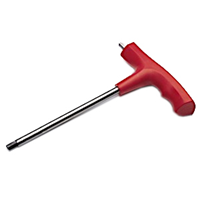



Item Number: SKU:SM-327
MR Unsafe Holding Point Sign W/ Tether
MR Unsafe Holding Point Sign W/ Tether
 What does this mean?

MR Safe – an item that poses no known hazards in all MRI environments. Using the terminology, “MR Safe” items are non-conducting, non-metallic, and non-magnetic items such as a plastic Petri dish. An item may be determined to be MR Safe by providing a scientifically based rationale rather than test data.

MR Conditional – an item that has been demonstrated to pose no known hazards in a specified MR environment with specified conditions of use. “Field” conditions that define the MR environment include static magnetic field strength, spatial gradient magnetic field, dB/dt (time rate of change of the magnetic field), radio frequency (RF) fields, and specific absorption rate (SAR). Additional conditions, including specific configurations of the item (e.g., the routing of leads used for a neurostimulation system), may be required.

MR Unsafe – An item that is known to pose hazards in all MRI environments. MR Unsafe items include magnetic items such as a pair of ferromagnetic scissors.
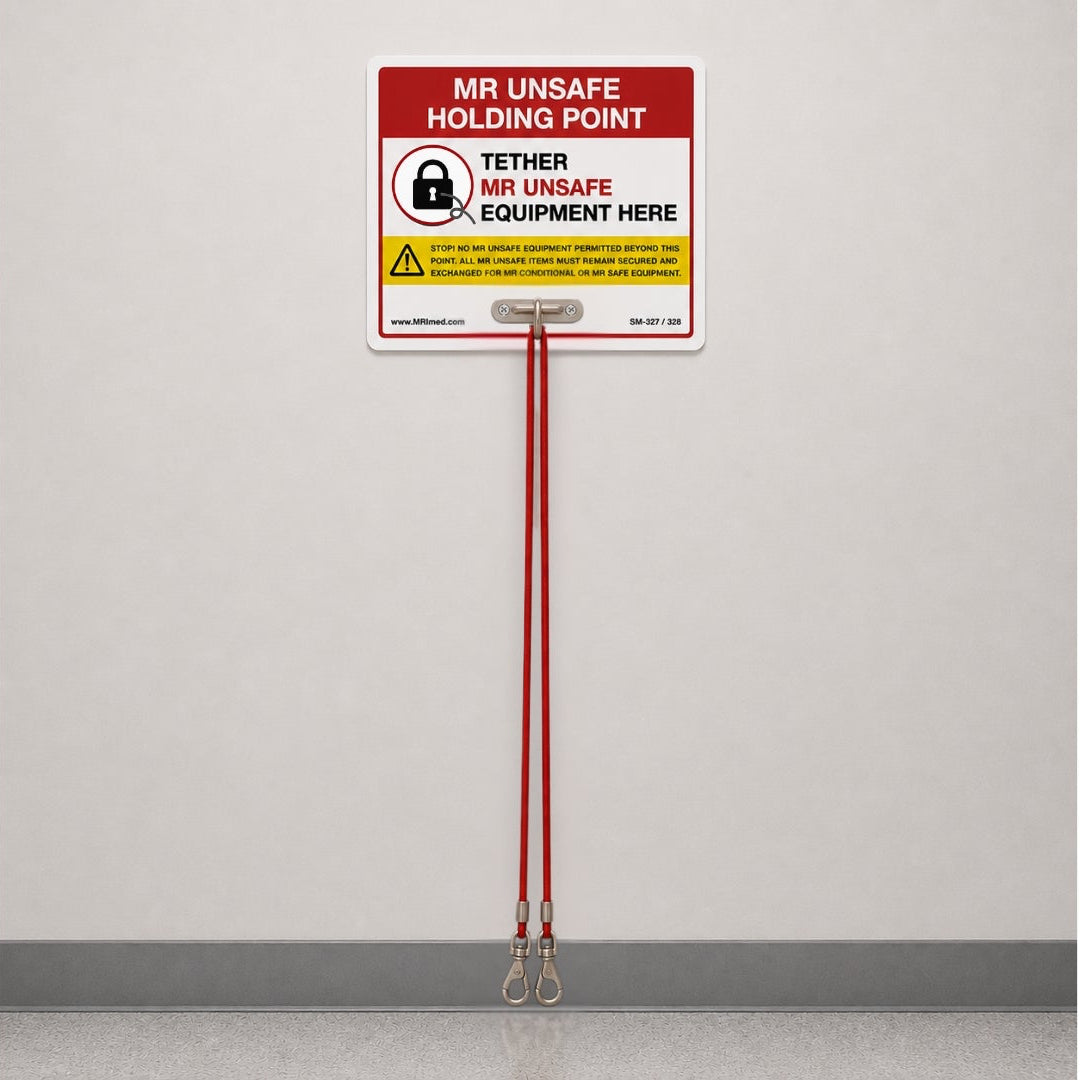
As ACR regulations become more strict with MR Unsafe items entering Zone III, set your facility up for success with this MR Unsafe Holding Point Sign with Tether. Featuring a self-adhesive sign, eye plate for mounting, and your choice of a 10-foot standard tether, or 10-foot tether with combination lock, this safety sign is the perfect visual reminder for staff entering the MRI Suite to safely tether MR Unsafe transportation away from Zone IV, and exchange them for MR Conditional options instead. Install the sign in a clearly visible location outside of any applicable magnetic field (gauss) boundary and sufficiently removed from the entrance to Zone IV. This item is MR Unsafe and is designed for use in Zones II or III.
This product is intended as a visual reminder only. The tether cable and sign are not designed to restrain, secure, or stop equipment from moving toward the MRI system. The sign and tether are not weight-bearing and should never be relied upon as a physical restraint against the magnetic field, a safety device, or substitute for established MRI safety policies, staff training, or proper equipment screening.
Features:
- Tether mechanism safety sign that creates a designated holding area for MR Unsafe equipment
- Provides a visual reminder to stop and verify equipment before advancing too close to the magnet with ferrous equipment
- Helps reinforce established MRI safety workflows
- Each tether includes either a double-ended carabiner clip with safety lock or 3-digit resettable combination lock
- Includes an eyeplate for mounting
- MR Unsafe
Overall Dimensions:
- 12"L x 9"H sign
- Tether length: 10 feet
Disclaimer: This product is not a restraint system, physical barrier, or magnetic safety device. MRI Med assumes no responsibility for improper installation or use of this product. Always follow your facility's MRI safety policies and procedures, including equipment screening and access control.
Couldn't load pickup availability


Frequently Asked Questions
Additional Resources

Innovations in MR Conditional Transport Devices (2025 Trends)

Avoiding MRI Suite Accidents During Patient Transfers: Best Practices

Case Study: MRI Transport Efficiency in a Mid-Size Hospital

MR Conditional Wheelchairs vs. Stretchers: Which Is Right for You?

How to Design an MRI Suite Transport Workflow: Step-by-Step Guide

MRI Patient Transport Solutions: Safe and Efficient Options

What Hospitals Get Wrong About MR Safe Equipment

MRI Safety Standards for Medical Equipment in 2025

MR Zones I-IV: Equipment Guidelines You Must Know

ASTM F2503: What It Means for MRI Equipment Buyers

Understanding MR Safe, MR Conditional, and MR Unsafe Labels
