
Skip to product information
1 of 1

Item Number: SKU:WC-108

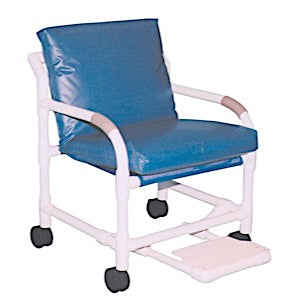
MRI Conditional 24" PVC Transfer Chairs

MRI Conditional 24" PVC Transfer Chairs

Regular price $769.00
Regular price Sale price $769.00
MR Conditional What does this mean?
MR Safe

MR Safe – an item that poses no known hazards in all MRI environments. Using the terminology, “MR Safe” items are non-conducting, non-metallic, and non-magnetic items such as a plastic Petri dish. An item may be determined to be MR Safe by providing a scientifically based rationale rather than test data.

MR Conditional

MR Conditional – an item that has been demonstrated to pose no known hazards in a specified MR environment with specified conditions of use. “Field” conditions that define the MR environment include static magnetic field strength, spatial gradient magnetic field, dB/dt (time rate of change of the magnetic field), radio frequency (RF) fields, and specific absorption rate (SAR). Additional conditions, including specific configurations of the item (e.g., the routing of leads used for a neurostimulation system), may be required.

MR Unsafe

MR Unsafe – An item that is known to pose hazards in all MRI environments. MR Unsafe items include magnetic items such as a pair of ferromagnetic scissors.

Sale Sold out
Shipping calculated at checkout.

The MRI Conditional 24-inch PVC Transfer Chair is meticulously designed for use in MRI environments, providing exceptional functionality and safety across medical facilities. Constructed from non-conductive and non-magnetic PVC materials, this chair adheres to the strict requirements for compatibility with MRI equipment, ensuring reliable performance during diagnostic and treatment procedures. Its lightweight yet durable build facilitates seamless patient mobility, while the ergonomic design enhances comfort for patients and simplifies operations for medical staff. With its locking casters for stability during transport and an adjustable seat for tailored convenience, this transfer chair delivers practicality and dependability in healthcare settings.

Engineered to meet the stringent demands of modern MRI products, the chair incorporates additional features to maximize usability. Anti-bacterial cushions promote a hygienic environment, supporting cleanliness in high-use areas, while sliding footrests enhance patient comfort. Threaded stem casters allow for smooth maneuverability, ensuring efficient handling in imaging centers, hospitals, and other specialized facilities. With the ability to accommodate up to 250 pounds and MR-conditional up to 3 Tesla, the 24-inch PVC Transfer Chair offers a versatile and indispensable solution for healthcare professionals prioritizing safe and effective patient transfer within MRI environments.

Overall Dimensions:

  • Internal Width: 24"
  • External Width: 28"
  • (4) 5" x 1.25" casters 

Note: Available in 20” and 24” widths 

View full details

Frequently Asked Questions

1. What advantages does a 24-inch MRI-Conditional transfer chair offer compared to narrower MRI transport options?

The 24-inch width gives you more room for patients who need extra stability without jumping all the way to a bariatric-sized chair. It’s a good middle ground for MRI departments that see a mix of mobility levels—wide enough for comfort, but still easy to maneuver through MRI corridors and Zone III doorways. Many facilities choose the 24-inch model as their “universal” MRI transfer chair because it reduces the number of times you need to swap chairs between patients.

2. Can this PVC transfer chair stay in the MRI room during patient setup at 1.5T or 3T?

Yes—because it’s MR Conditional up to 3 Tesla, it can be brought into the scan room under the stated conditions. Facilities usually use it in Zones II and III and bring it into Zone IV for patient positioning when needed. It’s built from non-magnetic PVC and non-ferrous components, so you’re not fighting unexpected drift or pull near the magnet. Just move it out of the bore area before the actual scan starts.

3. How does this chair hold up in high-volume MRI workflows where cleaning cycles are constant?

PVC handles disinfectants really well, which is why imaging centers like it. The anti-bacterial cushions wipe clean between patients, and there’s no metal hardware to rust or react to moisture. In busy MRI sites where turnover time matters, the smooth PVC frame and accessible seams make it easy for techs to keep the chair ready without slowing down the workflow.

4. Is the 24-inch MRI PVC transfer chair comfortable enough for patients who need support during longer prep times?

Yes—this model tends to feel more stable and secure for patients who lean, brace themselves, or take extra time during transfers. The larger seat area, sliding footrests, and padded cushions spread weight more evenly than a narrow chair, which helps anxious or mobility-limited patients feel grounded. For departments with a lot of neuro, orthopedic, or elderly patients, the added width makes a noticeable difference in comfort and confidence.

5. What should an MRI facility consider before choosing the 24-inch width over the 20-inch model?

Facilities usually look at three things:
Patient mix: If you routinely handle larger-bodied patients or anyone who benefits from extra space and stability, the 24-inch model is the better fit.
Suite layout: The external width is 28 inches, so confirm it fits your MRI door clearances and turns, especially in older buildings.
Workflow: Techs often find that one mid-width transfer chair reduces equipment switching when prepping multiple patients back-to-back.

Because these are made-to-order and non-returnable except for manufacturer defects, double-checking your typical patient population and room layout is the safest move.

Additional Resources

Innovations in MR Conditional Transport Devices (2025 Trends)

Innovations in MR Conditional Transport Devices (2025 Trends)

The landscape of MRI patient transport is evolving rapidly. Hospitals and imaging centers are pri...
Read more
Avoiding MRI Suite Accidents During Patient Transfers: Best Practices

Avoiding MRI Suite Accidents During Patient Transfers: Best Practices

Patient safety is the top priority in MRI suites. Accidents during patient transfers can lead to ...
Read more
Case Study: MRI Transport Efficiency in a Mid-Size Hospital

Case Study: MRI Transport Efficiency in a Mid-Size Hospital

Efficient MRI patient transport is critical for patient safety, scanner throughput, and overall w...
Read more