
Skip to product information
1 of 1

Item Number: SKU:OX-127

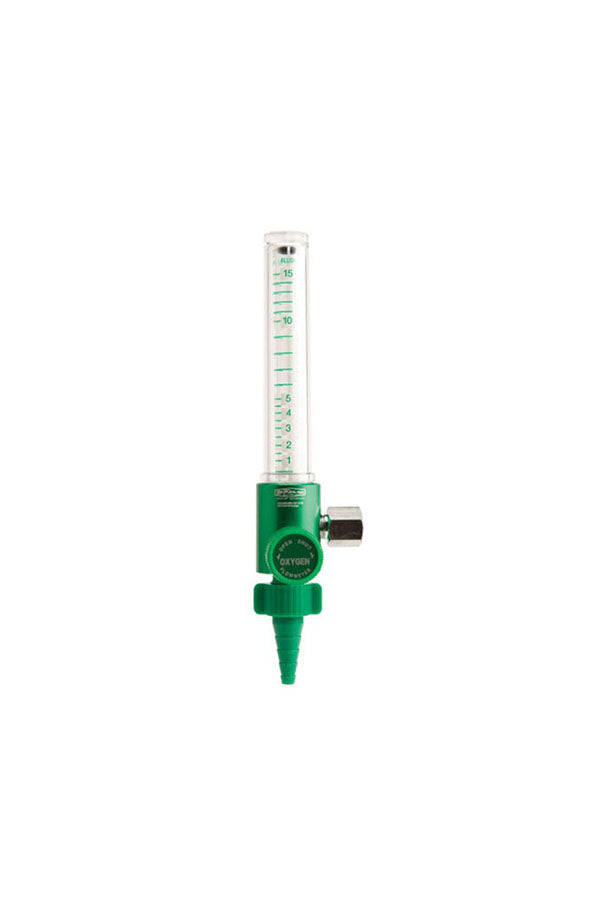
MRI Conditional Oxygen flowmeter 0-15LPM

MRI Conditional Oxygen flowmeter 0-15LPM

Regular price $119.00
Regular price Sale price $119.00
MR Conditional What does this mean?
MR Safe

MR Safe – an item that poses no known hazards in all MRI environments. Using the terminology, “MR Safe” items are non-conducting, non-metallic, and non-magnetic items such as a plastic Petri dish. An item may be determined to be MR Safe by providing a scientifically based rationale rather than test data.

MR Conditional

MR Conditional – an item that has been demonstrated to pose no known hazards in a specified MR environment with specified conditions of use. “Field” conditions that define the MR environment include static magnetic field strength, spatial gradient magnetic field, dB/dt (time rate of change of the magnetic field), radio frequency (RF) fields, and specific absorption rate (SAR). Additional conditions, including specific configurations of the item (e.g., the routing of leads used for a neurostimulation system), may be required.

MR Unsafe

MR Unsafe – An item that is known to pose hazards in all MRI environments. MR Unsafe items include magnetic items such as a pair of ferromagnetic scissors.

Sale
Shipping calculated at checkout.

The MRI Conditional Oxygen Flowmeter provides precision and reliability, with a measurement range of 0-15 LPM for accurate oxygen flow measurement. Designed to meet the rigorous demands of MRI environments, this flowmeter is backflow compensated to enhance both safety and performance, ensuring dependable functionality in critical settings. Its highly accurate design features an easy-to-read display for quick and efficient oxygen flow monitoring, making it an essential tool for healthcare professionals working with MRI equipment.

  • Backflow compensated
  • Highly accurate, easy to read
  • Anodized aluminum body
  • Shatter-resistant polycarbonate Thorpe tube
  • Includes DISS Hand Tight connector - other connections available
View full details

Frequently Asked Questions

1. Is the MRI Conditional Oxygen Flowmeter approved for use inside the MRI suite?

Yes. This flowmeter is MR Conditional, meaning it’s safe for use in MRI environments up to 3 Tesla when used under its stated conditions. It’s built from non-magnetic materials—an anodized aluminum body and a shatter-resistant polycarbonate Thorpe tube—so it won’t be attracted to the magnet or cause imaging distortion. It can remain in the scan room (Zones III and IV) for patient setup and monitoring without risk to equipment or image quality.

2. How does this MRI oxygen flowmeter differ from a standard hospital flowmeter?

The difference comes down to materials and magnetic safety. Standard flowmeters often use steel or magnetic alloys that are unsafe near an MRI magnet. This model is engineered specifically for MRI use with non-magnetic components, a backflow-compensated 0–15 LPM scale, and a clear, easy-to-read display for quick verification in low-light conditions. It’s precise, durable, and optimized for patient oxygen control in MRI environments where safety and accuracy can’t be compromised.

3. Can this MRI flowmeter connect to different oxygen outlet types or systems?

Yes. The standard configuration includes a DISS Hand Tight connector, which fits most MRI oxygen delivery systems. For facilities using alternate wall outlets, MRI Med also offers Chemetron, Ohmeda, and Puritan Bennett connectors upon request. All versions are made with non-magnetic materials to maintain MR Conditional labeling and ensure a secure, leak-free connection across different setups.

4. Can this MRI oxygen flowmeter be used during scanning, or only before and after?

This flowmeter can remain in the MRI room during active scanning, provided it’s mounted or positioned according to MRI Med’s use guidance. It’s tested for magnetic displacement and torque resistance at 3T, meaning it won’t interfere with scanning or patient safety when properly installed. This allows clinicians to maintain continuous oxygen delivery without having to remove or reposition the device between scans.

5. Does this oxygen flowmeter work with other MRI Med gas delivery products?

Yes. It’s designed to integrate seamlessly with MRI Med’s full line of MR Conditional oxygen regulators, hoses, and wall outlets. Using a matched system ensures consistent pressure control, reduces the risk of leaks or mismatched fittings, and keeps your entire MRI oxygen supply setup within the same safety parameters. Many facilities standardize on MRI Med components for reliability, compatibility, and consistent labeling across all MRI zones.

Additional Resources

Innovations in MR Conditional Transport Devices (2025 Trends)

Innovations in MR Conditional Transport Devices (2025 Trends)

The landscape of MRI patient transport is evolving rapidly. Hospitals and imaging centers are pri...
Read more
Avoiding MRI Suite Accidents During Patient Transfers: Best Practices

Avoiding MRI Suite Accidents During Patient Transfers: Best Practices

Patient safety is the top priority in MRI suites. Accidents during patient transfers can lead to ...
Read more
Case Study: MRI Transport Efficiency in a Mid-Size Hospital

Case Study: MRI Transport Efficiency in a Mid-Size Hospital

Efficient MRI patient transport is critical for patient safety, scanner throughput, and overall w...
Read more
MR Conditional Wheelchairs vs. Stretchers: Which Is Right for You?

MR Conditional Wheelchairs vs. Stretchers: Which Is Right for You?

When it comes to MRI patient transport, choosing the right device can dramatically affect both pa...
Read more
How to Design an MRI Suite Transport Workflow: Step-by-Step Guide

How to Design an MRI Suite Transport Workflow: Step-by-Step Guide

Transporting patients safely in an MRI environment is a complex task that combines patient safety...
Read more
MRI Patient Transport Solutions: Safe and Efficient Options

MRI Patient Transport Solutions: Safe and Efficient Options

Moving patients safely in an MRI environment is more than just pushing a stretcher or wheelchair ...
Read more
What Hospitals Get Wrong About MR Safe Equipment

What Hospitals Get Wrong About MR Safe Equipment

Hospitals rely on MRI technology every day for life-saving diagnoses. But many facilities still m...
Read more
MRI Safety Standards for Medical Equipment in 2025

MRI Safety Standards for Medical Equipment in 2025

Medical imaging, particularly MRI, relies on strong magnetic fields to produce detailed diagnosti...
Read more
MR Zones I-IV: Equipment Guidelines You Must Know

MR Zones I-IV: Equipment Guidelines You Must Know

MRI safety is crucial for protecting patients, staff, and imaging equipment. MRI scanners generat...
Read more
ASTM F2503: What It Means for MRI Equipment Buyers

ASTM F2503: What It Means for MRI Equipment Buyers

MRI equipment safety is critical for protecting patients, staff, and ensuring high-quality imagin...
Read more
Understanding MR Safe, MR Conditional, and MR Unsafe Labels

Understanding MR Safe, MR Conditional, and MR Unsafe Labels

Medical imaging, particularly MRI, relies on powerful magnetic fields. Using the wrong type of eq...
Read more
How to Choose MR Safe Equipment: Compliance, Safety, and Zones

How to Choose MR Safe Equipment: Compliance, Safety, and Zones

MRI is one of the most advanced diagnostic tools available today. However, its powerful magnetic ...
Read more