
Skip to product information
1 of 1

Item Number: SKU:WC-111

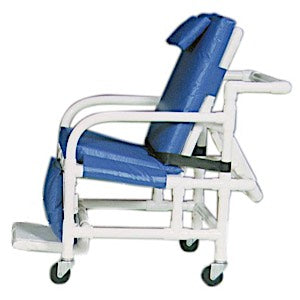
MRI Conditional PVC 24" Geri Chair

MRI Conditional PVC 24" Geri Chair

Regular price $995.00
Regular price Sale price $995.00
MR Conditional What does this mean?
MR Safe

MR Safe – an item that poses no known hazards in all MRI environments. Using the terminology, “MR Safe” items are non-conducting, non-metallic, and non-magnetic items such as a plastic Petri dish. An item may be determined to be MR Safe by providing a scientifically based rationale rather than test data.

MR Conditional

MR Conditional – an item that has been demonstrated to pose no known hazards in a specified MR environment with specified conditions of use. “Field” conditions that define the MR environment include static magnetic field strength, spatial gradient magnetic field, dB/dt (time rate of change of the magnetic field), radio frequency (RF) fields, and specific absorption rate (SAR). Additional conditions, including specific configurations of the item (e.g., the routing of leads used for a neurostimulation system), may be required.

MR Unsafe

MR Unsafe – An item that is known to pose hazards in all MRI environments. MR Unsafe items include magnetic items such as a pair of ferromagnetic scissors.

Sale Sold out
Shipping calculated at checkout.

The MRI Conditional PVC 24-inch Geri Chair is expertly crafted to address the specialized needs of medical environments that require compatibility with advanced MRI equipment. Constructed from durable, high-quality PVC, this chair ensures dependable performance while maintaining a lightweight and ergonomic design for optimal patient comfort. Its 24-inch spacious seating accommodates a wide range of patient requirements, making it an essential addition to facilities seeking dependable MRI products that enhance patient care and operational efficiency. With a weight capacity of 400 pounds and precision engineering, this geri chair supports both functionality and compliance.

This chair includes practical features designed with safety and convenience in mind. Solid vinyl cushions are independently secured, allowing for easy cleaning and replacement, while the solid base design prevents issues such as sagging. Additional features such as an adjustable safety belt securely attached to the frame, an independent elevating and sliding footrest, and ergonomic bent arms improve both usability and patient comfort. The casters are built to remain stable during standard use, and its MR Conditional rating (up to 3 Tesla) guarantees MRI compatibility without compromising performance. Combining durability, comfort, and advanced functionality, this geri chair offers an essential solution for medical facilities requiring reliable MRI equipment.

Overall Dimensions:

  • Internal Width: 24"
  • 5" x 1.25" heavy-duty threaded stem casters for stability and security

Note: Available in 18”, 21”, 24”, and 30” widths with load capacities ranging from 300-700 pounds 

View full details

Frequently Asked Questions

1. When is a 24-inch MRI geri chair the better choice over a standard-width model?

Facilities usually choose the 24-inch width when they see a steady mix of larger-body patients, post-surgical cases, or anyone who needs more lateral space to sit comfortably during MRI prep or recovery. It offers noticeably more room than an 18" or 21" chair without jumping to a full 30" bariatric platform. If your team struggles with patients feeling “pinched” in narrow seating, this size solves that while still fitting easily through MRI control-room doors and tight corridors.

2. Is the 24-inch PVC geri chair safe to use in MRI Zones III and IV at 3 Tesla?

Yes. The chair is MR Conditional up to 3T and built entirely from non-magnetic PVC components, so it won’t create attraction forces or interfere with imaging equipment when positioned near the magnet. The threaded-stem casters stay stable on smooth MRI flooring, which helps during patient transfers and when moving the chair close to the bore for prep.

3. How does the 24-inch seating and footrest design support patients with mobility or comfort needs?

The wider seat gives patients more room to adjust without leaning over the arm rails, which is especially helpful for those with limited core strength, chronic pain, or swelling. The elevating and sliding footrest lets your team position legs in a way that reduces pressure and keeps patients comfortable during longer wait times. It’s a noticeable upgrade for outpatient imaging centers that see orthopedic, cardiac, or neuro patients who fatigue easily.

4. What should biomeds know about maintaining a PVC MRI geri chair in daily use?

PVC holds up well to frequent disinfecting, which is one of the main reasons MRI departments prefer it. The cushions are individually secured, so a torn or worn cushion can be swapped without touching the rest of the chair. The solid base prevents long-term sagging—something biomeds often flag with older metal-frame geri chairs. Routine PM is simple: verify caster mobility, check the belt hardware, and confirm the footrest hinges move smoothly.

5. Are there ordering considerations for the 24-inch MRI geri chair, especially for weight capacity and return policy?

This model supports up to 400 pounds and works well as a mid-range option between standard and bariatric seating. Because each PVC geri chair is built to order, facilities typically confirm sizing needs upfront—18", 21", 24", or 30"—to align with patient volume and physical space. Like other made-to-order PVC products, it’s non-returnable unless there’s a manufacturer defect, so most purchasers review width, workflow fit, and weight requirements before finalizing the order.

Additional Resources

Innovations in MR Conditional Transport Devices (2025 Trends)

Innovations in MR Conditional Transport Devices (2025 Trends)

The landscape of MRI patient transport is evolving rapidly. Hospitals and imaging centers are pri...
Read more
Avoiding MRI Suite Accidents During Patient Transfers: Best Practices

Avoiding MRI Suite Accidents During Patient Transfers: Best Practices

Patient safety is the top priority in MRI suites. Accidents during patient transfers can lead to ...
Read more
Case Study: MRI Transport Efficiency in a Mid-Size Hospital

Case Study: MRI Transport Efficiency in a Mid-Size Hospital

Efficient MRI patient transport is critical for patient safety, scanner throughput, and overall w...
Read more