
Skip to product information
1 of 1

Item Number: SKU:WC-112

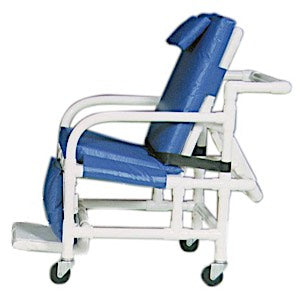
MRI Conditional PVC 30" Geri Chair

MRI Conditional PVC 30" Geri Chair

Regular price $1,385.00
Regular price Sale price $1,385.00
MR Conditional What does this mean?
MR Safe

MR Safe – an item that poses no known hazards in all MRI environments. Using the terminology, “MR Safe” items are non-conducting, non-metallic, and non-magnetic items such as a plastic Petri dish. An item may be determined to be MR Safe by providing a scientifically based rationale rather than test data.

MR Conditional

MR Conditional – an item that has been demonstrated to pose no known hazards in a specified MR environment with specified conditions of use. “Field” conditions that define the MR environment include static magnetic field strength, spatial gradient magnetic field, dB/dt (time rate of change of the magnetic field), radio frequency (RF) fields, and specific absorption rate (SAR). Additional conditions, including specific configurations of the item (e.g., the routing of leads used for a neurostimulation system), may be required.

MR Unsafe

MR Unsafe – An item that is known to pose hazards in all MRI environments. MR Unsafe items include magnetic items such as a pair of ferromagnetic scissors.

Sale Sold out
Shipping calculated at checkout.

The MRI Conditional PVC 30-inch Geri Chair is a specialized seating solution designed specifically for environments utilizing MRI equipment. Built with durable PVC material, this chair ensures long-lasting performance and reliability in demanding healthcare settings such as hospitals, imaging centers, and diagnostic facilities. Expertly engineered for compatibility with MRI products, it supports up to 700 pounds and features ergonomic design elements to enhance patient comfort. The chair’s solid vinyl cushions are independently secured, allowing for easy cleaning and replacement, while its lightweight yet robust construction ensures effortless maneuverability. Additionally, the solid base prevents sagging, making it a dependable and practical addition to any MRI-compatible equipment inventory.

Key features of this 30-inch geri chair include an independently elevating and sliding footrest for enhanced comfort, ergonomic bent arms for seamless lateral transfers, and an adjustable safety belt securely attached to the frame. Its casters are designed to remain in place during normal use, ensuring stability and ease of handling. With MR Conditional compatibility up to 3 Tesla, this chair provides a safe and effective solution for healthcare professionals and patients requiring its use in MRI suites.

Overall Dimensions:

  • Internal Width: 30"
  • 5" x 1.25" heavy-duty threaded stem casters for stability and security

Note: Available in 18”, 21”, 24”, and 30” widths with load capacities ranging from 300-700 pounds 

View full details

Frequently Asked Questions

1. When would a facility need a 30-inch MRI geri chair instead of a standard or mid-width model?

Imaging teams usually step up to a 30-inch chair when they’re serving a bariatric population or patients who simply can’t sit comfortably in 18–24 inch seating. The wider frame gives patients more room to settle in without leaning over the sides, which reduces anxiety and makes transfers a lot safer. Facilities that see trauma, cardiac, or general radiology cases with higher BMI patients often choose the 30-inch width to avoid keeping a second, non-MRI-safe bariatric chair in the suite.

2. Is the PVC 30-inch geri chair fully MR Conditional for use near a 3T magnet?

Yes. The chair is MR Conditional up to 3 Tesla and built entirely from non-magnetic PVC and vinyl components. That means it can be moved through Zones II and III and positioned in Zone IV for prep or recovery without creating torque or attraction forces. Its heavier-duty frame stays stable around high-field systems, which is especially important when accommodating patients in the 500–700-lb range.

3. How does the 30-inch geri chair support bariatric patients during MRI prep and recovery?

The wider seating, adjustable belt system, and solid base design help distribute weight evenly so patients don’t feel unstable or compressed. The sliding footrest supports the legs without sagging, and the bent arms make side transfers easier—even for patients who rely heavily on arm support. For longer wait times between sequences or for post-scan recovery, the extra space makes a noticeable difference in patient comfort and safety.

4. What should biomeds know about cleaning and maintaining a bariatric PVC geri chair in daily MRI use?

PVC is low-maintenance and handles repeated disinfection without degrading, which is why it’s so common in MRI environments. The cushions are individually secured, so if one gets torn, stained, or worn out, you can replace just that section rather than the whole set. For routine PM, biomeds usually check caster threads, belt hardware, and footrest hinges. The solid PVC base prevents the sagging that older metal-based bariatric chairs struggle with over time.

5. Are there ordering or installation considerations for a 30-inch MRI geri chair with a 700-lb capacity?

This size is built to order, so most facilities confirm door clearance, hallway width, and patient volume before purchasing. The 30-inch model gives you bariatric capacity without switching to a full MRI stretcher, but it still needs space to turn comfortably in MRI corridors. Because it’s a made-to-order PVC product, it’s non-returnable unless there’s a manufacturer defect, so most buyers review workflow fit and weight requirements with their team before finalizing the order.

Additional Resources

Innovations in MR Conditional Transport Devices (2025 Trends)

Innovations in MR Conditional Transport Devices (2025 Trends)

The landscape of MRI patient transport is evolving rapidly. Hospitals and imaging centers are pri...
Read more
Avoiding MRI Suite Accidents During Patient Transfers: Best Practices

Avoiding MRI Suite Accidents During Patient Transfers: Best Practices

Patient safety is the top priority in MRI suites. Accidents during patient transfers can lead to ...
Read more
Case Study: MRI Transport Efficiency in a Mid-Size Hospital

Case Study: MRI Transport Efficiency in a Mid-Size Hospital

Efficient MRI patient transport is critical for patient safety, scanner throughput, and overall w...
Read more