
Skip to product information
1 of 3

Item Number: SKU:US-269, US-286

Oakworks EA Multi-Specialty Ultrasound Table

Oakworks EA Multi-Specialty Ultrasound Table

Regular price $10,360.00
Regular price Sale price $10,360.00
MR Unsafe What does this mean?
MR Safe

MR Safe – an item that poses no known hazards in all MRI environments. Using the terminology, “MR Safe” items are non-conducting, non-metallic, and non-magnetic items such as a plastic Petri dish. An item may be determined to be MR Safe by providing a scientifically based rationale rather than test data.

MR Conditional

MR Conditional – an item that has been demonstrated to pose no known hazards in a specified MR environment with specified conditions of use. “Field” conditions that define the MR environment include static magnetic field strength, spatial gradient magnetic field, dB/dt (time rate of change of the magnetic field), radio frequency (RF) fields, and specific absorption rate (SAR). Additional conditions, including specific configurations of the item (e.g., the routing of leads used for a neurostimulation system), may be required.

MR Unsafe

MR Unsafe – An item that is known to pose hazards in all MRI environments. MR Unsafe items include magnetic items such as a pair of ferromagnetic scissors.

Sale
Shipping calculated at checkout.

Built to support a wide variety of ultrasound procedures, the EA Multi-Specialty Ultrasound Table combines exceptional patient positioning with ergonomic features that improve sonographer comfort and workflow efficiency. Its fully electric design, chair-position capability, and industry-leading stability make it an ideal solution for general imaging, vascular, OB/GYN, breast, musculoskeletal, and biopsy procedures.

Features:

  • Fully electric height, backrest (Fowler), Trendelenburg/reverse Trendelenburg, and cardio panel positioning
  • Converts from a flat exam table to a fully upright chair position in seconds for maximum procedural versatility
  • Electric cardio panel with adjustable access back support improves imaging access while supporting side-lying patients
  • Electric Fowler backrest adjusts up to 75° for flexible patient positioning
  • Trendelenburg and reverse Trendelenburg positioning (±18°)
  • 550 lb lift and patient weight capacity with twin tower design for exceptional strength and stability
  • Multi-function hand control with programmable positioning presets
  • 3" Comfort Foam™ padding with replaceable upholstered sections for long-term durability
  • Locking casters for easy mobility and secure positioning
  • ADA compliant height range: 19"–33"
  • Foot control, stirrups and paper roll holder included

Options Available:

  • Side Rails
  • Central Base Locking System
  • Arm Board

Overall Dimensions:

  • 30"W x 75"L

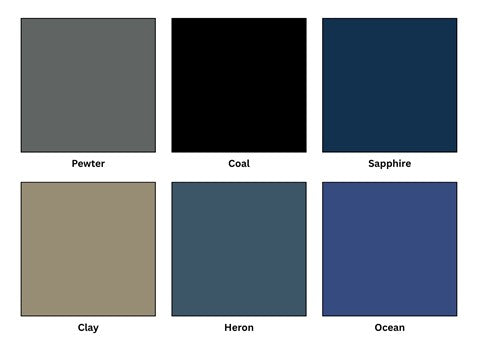
To purchase, please select color and options.

Recommended Add-ons

View full details

Frequently Asked Questions

1. When does it make sense to choose the Multi-Specialty table instead of a general ultrasound table?

The Multi-Specialty model is a stronger fit for departments that use the same room for vascular, breast, OB/GYN, musculoskeletal, biopsy, and general ultrasound exams. Its broader positioning options can reduce the need to purchase separate specialty tables or rely heavily on extra positioning accessories for different procedures.

2. How can the chair-position capability help during certain exams?

Being able to move the patient into an upright or near-upright position can be useful for procedures that are easier to perform when the patient is seated rather than lying flat. It can also make transitions between different exam positions smoother, especially in rooms that handle several procedure types throughout the day.

3. What is the practical benefit of the cardio panel and access back support?

The cardio panel creates additional access to the patient’s side and back, which can make side-lying and difficult-angle scans easier for the sonographer. This is especially useful in departments performing cardiac, breast, or other studies where close transducer access can be limited on a standard flat tabletop.

4. Is this a good choice for a room shared by several ultrasound specialties?

Yes. The table is designed around mixed-use imaging, so one room can support a broader range of exams without changing out major equipment between appointments. That can be especially useful for hospitals, imaging centers, and practices where room utilization needs to stay flexible throughout the day.

5. What should we review before ordering the Multi-Specialty Ultrasound Table?

Start by looking at the procedures performed most often in the room and deciding whether accessories such as side rails, an arm board, or the central base locking system would improve your workflow. You should also confirm room dimensions around the 30-inch by 75-inch tabletop so there is enough working space for the ultrasound system, clinician seating, patient transfers, and access from both sides.

Additional Resources

Innovations in MR Conditional Transport Devices (2025 Trends)

Innovations in MR Conditional Transport Devices (2025 Trends)

The landscape of MRI patient transport is evolving rapidly. Hospitals and imaging centers are pri...
Read more
Avoiding MRI Suite Accidents During Patient Transfers: Best Practices

Avoiding MRI Suite Accidents During Patient Transfers: Best Practices

Patient safety is the top priority in MRI suites. Accidents during patient transfers can lead to ...
Read more
Case Study: MRI Transport Efficiency in a Mid-Size Hospital

Case Study: MRI Transport Efficiency in a Mid-Size Hospital

Efficient MRI patient transport is critical for patient safety, scanner throughput, and overall w...
Read more
MR Conditional Wheelchairs vs. Stretchers: Which Is Right for You?

MR Conditional Wheelchairs vs. Stretchers: Which Is Right for You?

When it comes to MRI patient transport, choosing the right device can dramatically affect both pa...
Read more
How to Design an MRI Suite Transport Workflow: Step-by-Step Guide

How to Design an MRI Suite Transport Workflow: Step-by-Step Guide

Transporting patients safely in an MRI environment is a complex task that combines patient safety...
Read more
MRI Patient Transport Solutions: Safe and Efficient Options

MRI Patient Transport Solutions: Safe and Efficient Options

Moving patients safely in an MRI environment is more than just pushing a stretcher or wheelchair ...
Read more
What Hospitals Get Wrong About MR Safe Equipment

What Hospitals Get Wrong About MR Safe Equipment

Hospitals rely on MRI technology every day for life-saving diagnoses. But many facilities still m...
Read more
MRI Safety Standards for Medical Equipment in 2025

MRI Safety Standards for Medical Equipment in 2025

Medical imaging, particularly MRI, relies on strong magnetic fields to produce detailed diagnosti...
Read more
MR Zones I-IV: Equipment Guidelines You Must Know

MR Zones I-IV: Equipment Guidelines You Must Know

MRI safety is crucial for protecting patients, staff, and imaging equipment. MRI scanners generat...
Read more
ASTM F2503: What It Means for MRI Equipment Buyers

ASTM F2503: What It Means for MRI Equipment Buyers

MRI equipment safety is critical for protecting patients, staff, and ensuring high-quality imagin...
Read more
Understanding MR Safe, MR Conditional, and MR Unsafe Labels

Understanding MR Safe, MR Conditional, and MR Unsafe Labels

Medical imaging, particularly MRI, relies on powerful magnetic fields. Using the wrong type of eq...
Read more
How to Choose MR Safe Equipment: Compliance, Safety, and Zones

How to Choose MR Safe Equipment: Compliance, Safety, and Zones

MRI is one of the most advanced diagnostic tools available today. However, its powerful magnetic ...
Read more