
You have just positioned your patient for a complex neuro scan. They are nervous, but after a few minutes of reassurance, they are finally settled on the table. Right before you slide them into the bore, you notice a loose fastener on the head coil mirror. Alternatively, maybe an IV pole needs a quick adjustment, or a wheelchair footrest is stuck.
You need to fix the issue immediately to keep your schedule moving and keep the patient calm. Bringing a standard, MR Unsafe, steel screwdriver or wrench into Zone IV is entirely out of the question. Even a momentary lapse in judgment could turn a simple tool into a lethal projectile. This is exactly where MR Conditional equipment comes into play.
Every experienced technologist knows that the daily realities of running an imaging suite involve constant minor adjustments and fixes. You are not just pushing buttons; you are managing a highly sensitive physical environment. Having the right equipment on hand is non-negotiable for both efficiency and safety.
This guide explores the daily realities of MRI suite operations. We will look at exactly how and why MRI technicians rely on non-magnetic hand tools to keep their departments running smoothly, maintain safety standards, and prevent costly delays.
Why Non-Magnetic Tools Are Part of Everyday MRI Workflows
Running a busy imaging schedule requires constant adaptation. Things get loose, equipment needs configuring, and setups change between patients. Having the correct tools readily available allows technologists to handle these minor operational hiccups without breaking stride.
The role of tools in MRI suite operations
MRI technician tools are heavily utilized for routine room turnover and equipment management. Throughout a typical shift, technologists handle heavy coils, adjust patient positioning aids, and maneuver MR Conditional transport equipment. Over time, the fasteners, hinges, and locking mechanisms on these items require tightening or realignment. Technologists use specific MR Conditional wrenches, screwdrivers, and pliers to maintain these accessories directly within the scanning suite. This immediate access to tools keeps the workflow moving.
Why standard tools can’t be used
The static magnetic field of an MRI scanner is always on. Bringing standard ferromagnetic tools into Zone IV violates fundamental safety protocols because they are MR Unsafe. Standard steel or iron-based tools will be violently pulled toward the scanner, creating a severe projectile hazard that threatens the life of the patient and staff.
How proper tools support safe, efficient workflows
When a facility invests in dedicated non-magnetic equipment, the staff can operate with confidence. Technologists do not have to second-guess whether a wrench or screwdriver is safe to bring into the room. This confidence translates directly into efficiency. Instead of moving a broken piece of equipment out of Zone IV into a safe area for repair, the technician can quickly tighten a screw right next to the scanner. This saves valuable minutes between scans and reduces the physical strain of moving heavy equipment unnecessarily.
Common Situations Where MRI Technicians Use Non-Magnetic Tools
Most people think of facility maintenance when they think of tools, but the technologists running the scanner use them daily. The physical demands of preparing the room and maintaining the equipment require reliable, safe hand tools.
Routine equipment adjustments
Patient comfort and correct positioning are critical for high-quality diagnostic images. Often, the mirrors, coil attachments, and padding supports require physical adjustments. If a mirror bracket is loose, a non-magnetic screwdriver is required to secure it so the patient can see out of the bore. Locking mechanisms on MR Conditional stretchers and wheelchairs also see heavy use and frequently require a quick tightening with an MR Conditional wrench to remain fully functional.
Minor maintenance and troubleshooting
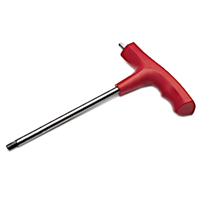
While major repairs are handled by field service engineers, minor troubleshooting falls to the daily staff. If a cable guide is snagging or a non-magnetic IV pole has a loose wheel, the technologist usually fixes it. Having tools used in MRI room environments readily accessible means these minor annoyances do not turn into major delays. A quick turn of an MR Conditional hex key can fix a wobbly stand in seconds, keeping the focus on patient care.
Preparing rooms between patients
Turning over the MRI suite between a routine knee scan and a complex cardiac case involves moving a lot of gear. Different coils are swapped out, contrast injectors are positioned, and physiological monitoring cables are routed. During this turnover, technicians frequently need to adjust equipment mounts or secure cables. Using designated MRI tools ensures that this fast-paced room preparation happens safely, without the risk of accidentally introducing a standard, MR Unsafe tool from a pocket.
Using Non-Magnetic Tools for MRI Equipment Maintenance
Maintaining the integrity of MRI coils and supporting equipment is a shared responsibility between the technologists and the biomedical engineering team. Proper maintenance ensures image quality and extends the lifespan of expensive imaging accessories.
Adjustments to coils and accessories
Surface coils, head coils, and extremity coils undergo significant wear and tear. Their connectors, outer casings, and adjustable straps often require minor maintenance. Technologists use non-magnetic screwdrivers to tighten the plastic housing screws on these coils. Keeping these housings secure prevents imaging artifacts and protects the delicate internal electronics from damage during daily handling.
Working around MR Conditional equipment
The scanning room contains various pieces of MR Conditional equipment, such as anesthesia machines, contrast injectors, and physiological monitors. This equipment must be maintained strictly with MR Conditional tools. If a bracket holding a monitor needs adjustment, an MR Conditional wrench must be used. Attempting to use a standard tool, even near the 5-gauss line, introduces unnecessary risk. For a complete selection of certified hand tools, you can browse high-quality MRI non-magnetic tools that meet strict safety standards.
Supporting biomedical and service teams
When in-house clinical engineering or external biomedical technicians arrive for preventative maintenance, they rely on the facility having clear safety protocols. Often, they will utilize the department’s dedicated MRI tools to ensure safe compliance. If a technologist has already isolated a loose component and has the non-magnetic tools ready, it significantly speeds up the biomedical team's repair process, reducing overall scanner downtime.
Facility and Room-Level Tasks That Require Non-Magnetic Tools
Beyond the scanner and the clinical accessories, the physical room itself requires maintenance. The MRI suite is a heavily trafficked area, and the fixtures within it need regular attention.
Fixing or adjusting room fixtures
Door hinges, cabinetry, lighting covers, and oxygen flowmeters are all subject to daily use. If a cabinet handle comes loose inside Zone IV, a standard maintenance worker cannot simply walk in with a steel screwdriver. The MRI technologist or an MR-trained facility worker must use a non-magnetic tool to fix the issue. Ensuring the physical room remains in good repair prevents safety hazards and maintains a professional environment for patients.
Working within MRI Zones III and IV
Access to Zones III and IV is strictly controlled. Any maintenance work performed in these areas requires careful screening. By keeping a dedicated set of MR Conditional tools within Zone III, the facility eliminates the risk of outside contractors accidentally bringing standard tools into the magnetic field. Technologists can supervise or directly assist with minor room repairs, knowing the tools being used are entirely safe for the environment.
Equip Your Team with Tools They Can Trust
Get high-quality, MRI-dedicated equipment that supports safer scans, better positioning, and smoother patient care.
View Trusted ProductsCoordinating with maintenance staff
Hospital facilities teams are incredibly busy and may not always understand the strict requirements of the MRI environment. When a work order is submitted for a broken soap dispenser or a loose handrail inside the scan room, the MRI technologist must act as the safety gatekeeper. Providing the maintenance staff with the department's own MR Conditional tools ensures the repair is done without compromising the safety of the suite.
How Non-Magnetic Tools Support Patient Safety
Safety is the absolute priority in any magnetic resonance environment. The protocols surrounding tool usage are designed to protect everyone who enters the room.
Preventing projectile risks
The most obvious and severe risk in an MRI suite is the projectile effect. A standard wrench pulled into a 3T scanner travels with lethal force. By strictly mandating the use of titanium or specialized alloy non-magnetic tools, this risk is completely eliminated. Technologists do not have to worry about a tool being pulled from their hand while they are leaning over a patient to adjust a head coil.
Maintaining a controlled MRI environment
A safe MRI environment is a highly controlled one. Every item that crosses the threshold into Zone IV must be accounted for and verified as MR Safe or MR Conditional. By utilizing a specific, brightly colored, or clearly marked set of MRI technician tools, the staff maintains visual control over what is in the room. This strict inventory control prevents the slow accumulation of untested, potentially dangerous items near the scanner.
Supporting safe access during procedures
During interventional MRI procedures or complex scans involving anesthesia, multiple staff members are present in the room. Lines, tubes, and monitoring equipment are everywhere. If a piece of equipment needs a physical adjustment during the procedure, a non-magnetic tool allows the technologist to make the fix without moving the patient or pausing the procedure. This keeps the patient stable and ensures continuous medical care.
Workflow Benefits of Having the Right Tools Available
Efficiency in an imaging department directly impacts patient care and department revenue. Every minute the scanner sits idle while a technician searches for a way to fix a minor issue is a minute lost.
Reducing delays during procedures
Imagine stopping a scan because a required piece of positioning equipment is loose, and you cannot find the right tool to fix it. The patient becomes anxious, the schedule backs up, and the staff gets stressed. Having a well-organized kit of MRI maintenance tools prevents these bottlenecks. The technician grabs the required non-magnetic wrench, tightens the bolt, and the scan continues with minimal interruption.
Improving response time for adjustments
When an issue is identified, the speed of the response matters. If a wheelchair brake is failing, it needs to be adjusted immediately before a patient attempts to transfer onto the table. Ready access to tools used in MRI suite operations means the technologist can perform a quick turn of a screw to secure the brake on the spot. This immediate response prevents accidents and keeps the workflow fluid.
Keeping operations smooth and predictable
Predictability is crucial for managing an imaging schedule. When the staff knows they have the resources to handle minor mechanical issues safely, the day runs smoother. They are not reliant on calling external departments for every loose screw. This autonomy empowers the technologists and creates a more resilient, capable department that can handle the daily friction of healthcare operations.
Challenges Technicians Face Without Proper MRI Tools
Operating an MRI suite without a dedicated set of non-magnetic hand tools is incredibly frustrating and inherently dangerous. It can force staff to make difficult choices between efficiency and safety, but having a dedicated set of non-magnetic tools in the MRI suite means they can prioritize both.
Delays caused by missing or unsafe tools
When a facility lacks proper MR Conditional tools for technicians, minor problems cause major delays. If a piece of equipment breaks, it must be removed from Zone IV entirely before standard tools can be used on it. Moving a heavy stretcher or a bulky phantom out of the scan room just to tighten a single bolt wastes enormous amounts of time and physical effort.
Reliance on external maintenance teams
Without their own tools, MRI technologists are entirely dependent on the hospital's clinical engineering or facilities departments for the smallest fixes. Submitting a work order and waiting for a technician to arrive can take hours or even days. During this time, the broken equipment is out of commission, which might mean canceling specific types of scans or finding inefficient workarounds.
Increased risk during urgent situations
The most dangerous scenario occurs when staff try to cut corners. If a minor fix is needed urgently, there is a temptation to quickly use a standard tool while holding it tightly. This is how devastating accidents happen. Providing the correct MRI tools removes this temptation entirely. Staff should never feel pressured to compromise safety to maintain the schedule.
Best Practices for Managing Tools in Daily MRI Operations
Simply purchasing non-magnetic tools is not enough; they must be managed correctly to remain effective and safe.
Keeping tools accessible but controlled
Tools must be easy to reach when needed but stored securely when not in use. Many departments choose to mount a non-magnetic tool board on the wall in Zone III, just outside the scan room door. This keeps the tools readily available for room turnover but out of the immediate magnetic field when unsupervised.
Organizing tool kits for efficiency
An unorganized tool drawer is almost as bad as having no tools at all. Organize the tools by type and size. Use shadow boards or custom foam inserts so technologists can see at a glance if a tool is missing. Knowing exactly where the 10mm non-magnetic wrench is located saves time and reduces stress during a busy shift.
Ensuring only approved tools are used
Establish a strict policy that only the department's dedicated, officially verified MR Conditional tools are allowed for use on MRI equipment. Do not allow outside contractors to use their own tools unless they have been thoroughly tested with a strong handheld magnet and approved by the MRI Safety Officer (MRSO). Regular audits of the tool kit ensure that standard ferromagnetic tools haven't accidentally been mixed in with the non-magnetic ones.
Final Thoughts: The Right Tools Keep MRI Workflows Running Smoothly
The daily operation of an MRI department is a complex balancing act between high patient throughput and uncompromising safety standards. MRI technologists manage this balance by relying on specialized equipment designed specifically for their environment.
Investing in high-quality, certified non-magnetic tools is an investment in your staff's efficiency and your patients' safety. By eliminating the projectile risks associated with standard hand tools, you empower your team to handle routine maintenance, room adjustments, and equipment troubleshooting without hesitation.
When your technicians have immediate access to the right MRI workflow tools, minor mechanical issues are resolved in seconds rather than hours. The schedule stays on track, the equipment remains in top condition, and the scanning suite remains a safe, controlled environment for everyone.


