
A biomedical engineer walks into Zone IV to tighten a loose track on the patient table. It is a quick fix, something that should take less than five minutes. They reach into their pocket for a standard steel wrench, thinking they will just keep a tight grip on it. The moment they cross the 5-gauss line, the wrench twists violently in their hand. The invisible pull of the scanner takes over, and suddenly, a routine adjustment becomes a near-miss safety incident.
This scenario is exactly why facilities cannot treat the MRI suite like any other room in the hospital. When it comes to maintaining these complex systems, standard, MR Unsafe tools are an active hazard.
Every day, facility teams, MRI service engineers, and technologists face routine maintenance tasks that require immediate attention. But because the MRI magnet is always on, reaching for a standard toolbox is never an option. You need specialized MRI repair tools designed specifically for high-magnetic environments.
This guide explores what tools are used for MRI maintenance, why standard equipment fails, and how proper tool selection keeps your imaging center safe and fully operational.
Why MRI Maintenance Requires Specialized Tools
Facility engineering and biomedical teams handle maintenance across the entire hospital. They are used to fixing everything from HVAC systems to surgical tables. But the MRI suite plays by a completely different set of rules.
The unique challenges of MRI environments
The primary challenge of any MRI environment is the static magnetic field. A 1.5T or 3.0T scanner generates a magnetic pull that is thousands of times stronger than the earth's magnetic field. This field does not turn off just because something needs servicing. Any maintenance work, whether it involves repairing the scanner itself or fixing a loose door hinge in the room, must happen under these intense magnetic conditions.
Why standard maintenance approaches don’t apply
In a typical clinical room, a broken cabinet or a loose bolt simply requires a technician to grab their standard tool bag. If a tool drops, it hits the floor. In an MRI suite, a dropped standard tool becomes a high-speed projectile. Standard maintenance approaches rely on convenience and speed, but MRI maintenance requires strict adherence to safety protocols and the use of MR Conditional tools.
The role of tool selection in safe repairs
Tool selection is the first line of defense in MRI safety. When service engineers and facility teams use the correct MRI maintenance equipment, they eliminate the risk of magnetic attraction altogether. Proper tool selection ensures that the technician can focus entirely on the repair at hand, rather than fighting the physical pull of the magnet or worrying about damaging the scanner.
Why Standard Tools Fail in MRI Environments
It is easy to assume that a standard tool will be fine if you just hold onto it tightly. This is a dangerous misconception. Standard, MR Unsafe tools fail in MRI environments because their basic material composition is fundamentally incompatible with strong magnetic fields.
Ferromagnetic materials and magnetic attraction
Most standard hand tools are made of steel or steel alloys. These ferromagnetic materials are highly responsive to magnetic fields. If brought into Zone IV, a steel tool will be pulled toward the center of the magnet with incredible force. The closer the tool gets to the bore, the stronger the rotational and translational forces become. No human hand is strong enough to resist the pull of a 3.0T magnet once it grabs hold of a ferromagnetic object.
Safety risks during maintenance work
The most obvious risk of standard tools is the projectile effect. A wrench or screwdriver flying into the bore can cause catastrophic injuries to anyone in its path. Even if no one is hurt, the impact can severely damage the scanner's internal components, leading to massive repair bills. Beyond projectiles, standard tools can also cause torqueing or twisting, injuring the technician's hand or wrist during a repair.
Limitations even outside the immediate magnet area
Some technicians wonder: can you use standard tools in MRI repair if you stay near the walls of the room? The answer is no. The fringe field extends outward from the scanner, and while it is weaker at the edges of the room, it is still unpredictable. A tool placed on a counter can easily be knocked closer to the scanner, instantly becoming a hazard. This is why MRI maintenance tool requirements dictate that only MR Safe or MR Conditional non-magnetic tools enter Zone IV.
What Tools Are Used for MRI Maintenance and Repairs
To perform maintenance safely, service teams must rely on equipment manufactured specifically for the MRI environment. These tools are crafted from non-ferrous materials that do not react to the magnetic field.
Non-magnetic hand tools
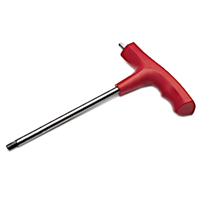
The foundation of any MRI repair kit is a solid set of non-magnetic hand tools. These are typically forged from materials like titanium or aluminum bronze. They look and function exactly like standard wrenches, screwdrivers, pliers, and hex keys, but they carry no magnetic footprint, and often come either color-coded or labeled to clarify their MRI rating. This allows technicians to perform intricate mechanical adjustments right at the edge of the bore without any magnetic interference.
MRI tool kits for service work
Instead of piecing together individual items, many facilities invest in comprehensive MRI tool kits. These kits provide a full range of essential hand tools in a secure, organized case. Having a dedicated kit ensures that biomedical teams always have exactly what they need for routine servicing, preventing the dangerous temptation to grab a standard tool out of frustration, or by accident.
Specialty tools for specific repairs
Certain repairs require highly specific equipment. From specialized tuning tools to non-magnetic ladders and cleaning supplies, service engineers rely on a wide variety of items. When outfitting your biomedical department, you can explore a complete range of MRI non-magnetic tools to ensure your team is prepared for any service scenario.
Common MRI Maintenance Tasks That Require Non-Magnetic Tools
MRI maintenance goes well beyond fixing the scanner itself. A wide range of daily tasks require the use of MR Safe and MR Conditional tools to ensure compliance and safety.
Equipment adjustments and servicing
The patient table, the docking mechanisms, and the phantom holders require regular mechanical adjustments. Screws vibrate loose over time, and moving parts need calibration. Because these components are physically attached to or placed directly inside the scanner, any tool used to service them must be completely non-magnetic.
Coil and accessory maintenance
Surface coils and positioning pads endure heavy daily use and frequently require minor repairs. A technician may need to replace a broken latch on a head coil or tighten a connector. Using standard tools for these tasks risks not only a projectile risk but also the potential introduction of artifact-causing metallic debris near the imaging area.
Equip Your Team with Tools They Can Trust
Get high-quality, MRI-dedicated equipment that supports safer scans, better positioning, and smoother patient care.
View Trusted ProductsFacility and infrastructure repairs
Zone IV is still a physical room that requires upkeep. Light bulbs need changing, HVAC vents need dusting, and door hinges need tightening. Facility teams tasked with these environmental repairs must use non-magnetic tools MRI maintenance protocols demand. Bringing a standard steel ladder or a regular power drill into the room for a "quick facility fix" is a leading cause of MRI accidents.
Risks of Using the Wrong Tools During MRI Maintenance
Ignoring MRI maintenance tool requirements is a gamble that eventually ends in disaster. The consequences of using ferromagnetic tools extend from immediate physical danger to severe financial fallout.
Projectile hazards and safety incidents
As mentioned earlier, the projectile hazard is the most acute risk. A flying tool can cause fatal injuries to technologists, patients, or the service engineers themselves. It only takes one momentary lapse in judgment—one dropped steel wrench—to create a life-altering safety incident.
Damage to MRI systems and components
MRI scanners are highly sensitive and incredibly expensive. A ferromagnetic tool striking the bore can crack the housing, damage the internal gradients, or ruin the RF coils. Even if the tool doesn't fly into the machine, using a magnetic tool near the scanner can disrupt the magnetic homogeneity, requiring a costly and time-consuming recalibration process.
Downtime and operational disruptions
If a standard tool gets stuck to the magnet, removing it safely often requires a controlled quench. Quenching an MRI scanner vents the liquid helium, shutting down the magnetic field. This process costs tens of thousands of dollars in helium replacement alone, not to mention the massive revenue loss from days of canceled patient scans while the machine is brought back online.
How Non-Magnetic Tools Support Safe and Efficient Repairs
Investing in a proper MRI repair tools list is not just about avoiding disaster. It is about enabling your technical teams to do their jobs efficiently and confidently.
Maintaining control in MRI Zones III and IV
When service engineers have access to dedicated MRI technician tools, they maintain complete control over the environment. There is no second-guessing whether a wrench is safe, and no need to constantly test tools with a handheld magnet before entering the room. This clear boundary keeps Zone III and Zone IV strictly controlled.
Reducing risk during hands-on work
A non-magnetic tool behaves predictably. It does not pull, twist, or vibrate in the technician's hand. This predictability reduces physical fatigue and eliminates the anxiety of working inside a high-field environment. The technician can focus fully on the mechanical repair, leading to better, faster service outcomes.
Improving workflow for service teams
Efficiency plummets when biomedical engineers have to hunt for safe tools or wait for an external service vendor to arrive for a minor fix. By keeping a comprehensive set of tools for MRI service engineers on-site, facilities empower their internal teams to handle routine maintenance immediately, keeping the scanner schedule running smoothly.
Best Practices for MRI Maintenance Tool Management
Owning the right tools is only half the battle. Managing those tools correctly prevents cross-contamination with standard equipment and ensures they are ready when needed.
Dedicated MRI tool kits
Never mix MRI tools with standard facility tools. Keep MRI tools in their own dedicated, clearly labeled cases. Many facilities use color-coded toolboxes or bright visual indicators to differentiate their MR Conditional equipment from the standard hospital tool carts.
Storage and access control
Store MRI maintenance equipment securely in Zone II or Zone III. Do not leave tools lying around inside the scanner room where they can be misplaced. Access to these specific tool kits should be restricted to trained personnel who understand the strict rules of the MRI environment.
Coordination with biomedical and engineering teams
Radiology managers must work closely with hospital engineering and biomedical departments. Ensure that every facility worker who might enter the MRI suite—even just to fix a light switch—understands that their standard tool belts cannot cross the threshold. Provide them with access to the facility's approved non-magnetic tools instead.
Common Mistakes Facilities Make with MRI Maintenance Tools
Even with good intentions, facilities often make operational errors that compromise the safety of their maintenance workflows.
Using standard tools “carefully”
The most dangerous phrase in MRI maintenance is "I'll be careful." The magnetic field does not care how strong your grip is or how cautious you are trying to be. Relying on human caution instead of proper non-magnetic equipment is a guaranteed path to an accident.
Borrowing tools from other departments
When a specific wrench size is missing from the MRI kit, a technician might run down to the main boiler room to borrow one. This completely invalidates the safety protocols of the MRI suite. If your kit is missing a piece, it must be replaced with a certified non-magnetic equivalent. MRI Med offers both tool kits, and individual tools for this reason.
Not standardizing approved equipment
Facilities often end up with a mismatched collection of tools purchased over many years. Some might be properly non-magnetic, while others might just be "less magnetic" stainless steel, which is still highly dangerous. Standardizing your equipment with certified, tested tools ensures there is no ambiguity when a technician reaches for a screwdriver.
Final Thoughts: The Right Tools Are Critical for MRI Maintenance
Maintaining an MRI scanner and its surrounding environment requires precision, expertise, and zero compromises on safety. You cannot cut corners by bringing standard steel equipment into Zone IV. The physical risks to personnel, the potential for catastrophic equipment damage, and the threat of massive operational downtime are simply too great.
By outfitting your biomedical and facility teams with certified MRI service tools, you remove the guesswork from routine repairs. Technicians can work confidently, the scanner remains protected, and your facility stays focused on what matters most: delivering uninterrupted, high-quality patient care.


