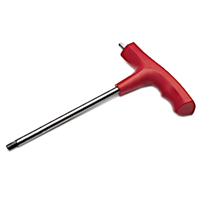

You need to make a quick adjustment to a patient monitor near the scanner. You grab a wrench from a nearby drawer. It looks dull and lightweight, leading you to assume it is aluminum. You walk into Zone IV, and suddenly, the wrench rips out of your hand, flying directly into the bore.
This terrifying scenario happens more often than anyone in the industry likes to admit. The root cause usually comes down to a simple misunderstanding of what materials are safe in an MRI room. Relying on appearance, weight, or a generic product name is a dangerous gamble in a high-magnetic-field environment.
Knowing exactly what materials are safe for MRI tools, and understanding how different metals react to powerful magnetic forces, is critical for anyone managing or working in these spaces. This guide breaks down the science of MRI non-magnetic materials, exploring common options like titanium and aluminum, and explaining why proper material selection is non-negotiable for MRI safety.
Why Material Choice Matters in MRI Environments
The environment inside an MRI suite is unforgiving. A magnetic field of 1.5T or 3.0T is always on, and it interacts with any material brought into its proximity. Choosing the right material for hand tools, carts, and maintenance equipment prevents catastrophic accidents and ensures uninterrupted patient care.
How MRI magnetic fields interact with different metals
When a metal object enters the magnetic field of an MRI scanner, the field aligns the atomic structure of the metal if it has magnetic properties. For ferromagnetic metals, this creates a violent attraction. The scanner acts as a massive electromagnet, pulling the object toward the center of the bore with incredible speed and force. Non-ferrous materials MRI environments require do not have this atomic structure, meaning the magnetic field passes through them without causing a physical pull.
Why some materials become hazardous
Materials become hazardous when they contain enough iron, nickel, or cobalt to react to the scanner's field. The risk is not just the pull itself, but the acceleration. A small tool can become a lethal projectile, known as the missile effect. Additionally, certain metals can cause artifacts on imaging if used near the patient during a scan, or they can heat up through radiofrequency-induced currents, creating burn risks.
The role of material selection in MRI safety
Facility managers and technologists must prioritize tool materials that are safe to use in MRI environments to mitigate these risks. Material selection forms the first line of defense against accidents. If a tool is manufactured entirely from non-magnetic materials, the risk of a projectile accident involving that specific item drops to zero. This simplifies safety protocols and gives staff peace of mind when working in Zone IV.
What Makes a Material Safe or Unsafe in MRI
To understand what metals are not allowed in MRI environments, we have to look at the basic properties of metals. The distinction between MR Safe, MR Conditional and MR Unsafe largely comes down to iron content and magnetic susceptibility.
Ferromagnetic vs non-ferrous materials
Ferromagnetic materials are highly susceptible to magnetization. Iron is the most common example, along with cobalt and nickel. These materials are strictly prohibited near the scanner. Non-ferrous materials do not contain iron in significant amounts. They lack the magnetic properties necessary to be pulled by the MRI scanner, making them the foundational building blocks for materials compatible in MRI environments.
Magnetic attraction and its risks
The primary risk of ferromagnetic materials is the translation and rotation force exerted by the scanner. The translation force pulls the object toward the isocenter, while the torque force tries to align the object's long axis with the magnetic field lines. This combination makes it nearly impossible for a human to hold onto a magnetic tool once it crosses the threshold of the static field.
Why “non-magnetic” isn’t always straightforward
A tool might be advertised as non-magnetic, but that term is often used loosely in general hardware manufacturing. A standard "non-magnetic" tool sold at a local hardware store might still contain trace amounts of iron, or it might have a magnetic fastener hidden inside the handle. In the context of a 3.0T scanner, even trace impurities can cause a noticeable and dangerous pull.
Common Materials Used in MR Conditional Tools
When outfitting a facility, you need an accurate, safe materials list to ensure you are buying the right equipment. Manufacturers rely on a few specific non-ferrous metals to create tools that are durable, functional, and completely safe for conditional use.
Titanium: strength and reliability
Titanium is the gold standard for heavy-duty MRI equipment. Titanium MRI tools are entirely non-ferromagnetic, meaning they pose no projectile risk. Beyond its safety profile, titanium is incredibly strong and resistant to corrosion. It can withstand the harsh cleaning chemicals used in hospitals. When technicians need a wrench or pliers that will not bend or break under pressure, titanium is usually the material of choice.
Aluminum: lightweight and non-ferrous
Aluminum is another excellent option for MRI environments. Is aluminum safe for MRI tools? Yes, aluminum is completely non-ferrous. Aluminum MRI tools are prized for being exceptionally lightweight, making them easy to handle during long shifts. Aluminum is commonly used for larger items like step stools, IV poles, and the handles of certain cleaning tools, as well as light-duty hand tools.
Brass and other non-ferrous alloys
Brass, copper, and bronze are also non-ferromagnetic. Brass is frequently used for fittings, non-sparking tools, and mallets. These materials provide excellent alternatives when titanium is unnecessary or cost-prohibitive.
Materials That Should Never Be Used in MRI Tools
Just as important as knowing what to use is knowing what to avoid. Bringing the wrong metal into Zone IV can result in severe injuries and millions of dollars in equipment damage.
Carbon steel and ferromagnetic metals
Carbon steel is highly ferromagnetic and represents the highest risk in an MRI environment. Standard mechanics tools, screwdrivers, and wrenches found in typical toolboxes are usually made of carbon steel or chrome-vanadium steel. These must be strictly banned from MRI suites.
Stainless steel (when it’s unsafe)
Stainless steel is a frequent source of confusion. The assumption that all stainless steel is safe leads to many near-misses. While some austenitic stainless steels (like 316L) have very low magnetic permeability, many common types of stainless steel (400 series) are highly magnetic, especially after they have been cold-worked or machined. Unless a stainless steel tool is specifically tested and labeled for MRI use, you should assume it is MR Unsafe.
Coated or mixed-material tools
Many industrial tools are coated in plastic, rubber, or ceramic. A non-magnetic coating does nothing to shield the magnetic field from pulling on a ferromagnetic core. A steel wrench dipped in thick rubber will still become a lethal projectile. Mixed-material tools, where only part of the tool is non-ferrous, are equally dangerous.
Titanium vs Aluminum: Which Is Better for MRI Tools?
When selecting equipment, buyers often weigh titanium MRI tools against aluminum MRI tools. Both are safe, but they serve very different functional purposes.
Equip Your Team with Tools They Can Trust
Get high-quality, MRI-dedicated equipment that supports safer scans, better positioning, and smoother patient care.
View Trusted ProductsStrength and durability differences
Titanium is remarkably strong, boasting a high strength-to-weight ratio. It can handle high torque and heavy impacts without deforming. If a biomedical engineer needs to tighten a stubborn bolt on a patient table, a titanium wrench is the right tool for the job. Aluminum, by contrast, is a softer metal. Aluminum hand tools are prone to bending, stripping, or denting if subjected to heavy force.
Weight and usability considerations
Aluminum shines when weight is the primary concern. For items that technicians have to carry around frequently, or for larger structural items like ladders, aluminum reduces physical strain. Titanium is heavier than aluminum, though still lighter than steel.
Cost vs performance trade-offs
Titanium is expensive to source and difficult to machine, making titanium tools a significant financial investment. Aluminum is abundant, cheap, and easy to manufacture. Facilities typically reserve their budget for titanium when purchasing essential, high-torque hand tools, while opting for aluminum or plastic for lighter-duty accessories and structural equipment.
Why Material Alone Doesn’t Guarantee MRI Safety
While identifying materials safe for MRI tools is the first step, it is not the only factor. A tool made from a safe material can still pose risks if the manufacturing process is flawed.
Tool design and construction factors
A tool must be designed specifically for the MRI environment. Standard manufacturing facilities process both steel and non-ferrous metals. If a titanium tool is machined on the same equipment as a steel tool without proper cleaning, iron particles can embed into the titanium. These surface impurities can cause the tool to exhibit a slight magnetic pull or create imaging artifacts.
Hidden components and fasteners
A tool might have a solid brass handle and an aluminum body, leading a user to believe it is completely safe. However, if the manufacturer used a standard steel screw to hold those pieces together, the tool is compromised. MR Conditional tools must be built from the ground up using exclusively non-magnetic components, right down to the smallest spring or pin.
Importance of proper testing and labeling
Because of the risks of hidden components and manufacturing impurities, you cannot rely on material composition alone. True MRI safety requires rigorous testing to ASTM standards. Tools must be placed in a controlled magnetic field to measure deflection and torque. Only after passing these tests can a tool be considered MR Safe or MR Conditional.
How to Verify That a Tool Is Safe for MRI Use
The safety of your staff and patients depends on strict verification protocols. Never allow an untested tool into Zone IV.
Understanding MR Safe and MR Conditional labeling
The FDA and international standards recognize specific labeling for MRI environments.
-
MR Safe: An item that poses no known hazards in all MRI environments. These are entirely non-magnetic, non-electrically conductive, and non-RF reactive. Many solid plastic or pure glass items fall here.
-
MR Conditional: An item that has been demonstrated to pose no known hazards in a specified MRI environment with specified conditions of use. Most metal MRI tools fall into this category, as they may conduct electricity or cause artifacts if placed directly inside the bore during a scan, even if they are non-magnetic.
-
MR Unsafe: An item that is known to pose hazards in all MRI environments and is not permitted.
Manufacturer specifications and documentation
Always buy tools from reputable manufacturers that specialize in MRI equipment. These suppliers will provide documentation outlining the exact testing standards the tool has met. If a vendor cannot provide documentation proving the tool was tested for MRI environments, do not purchase it for your facility.
Why assumptions can lead to risk
Assuming a tool is safe because "it looks like aluminum" or "the catalog said it was non-magnetic" is how accidents happen. A handheld metal detector can help screen tools before they enter the room, which should be used in conjunction with checking for proper labeling and manufacturer certification.
Common Misconceptions About MRI Tool Materials
Education is the best way to prevent accidents. Clearing up widespread misconceptions about materials safe for MRI environments empowers your team to make better decisions.
Misconception 1: “All stainless steel is safe”
As discussed earlier, this is a dangerous myth. The magnetic properties of stainless steel vary wildly depending on its exact alloy composition and how it was manufactured. Never trust a stainless steel item in an MRI suite unless it carries an official MR Conditional label.
Misconception 2: “If it doesn’t stick to a magnet, it’s safe”
Many technologists use a small handheld magnet to test equipment. While a strong pull from a handheld magnet definitely means the item is MR Unsafe, the absence of a pull does not guarantee it is MR Safe. A 3.0T MRI scanner is exponentially more powerful than a handheld magnet. A tool that seems non-reactive in the hallway might still exhibit a dangerous pull when exposed to the extreme spatial gradient of the scanner.
Misconception 3: “Coatings make tools MRI-compatible”
Rubberized grips, plastic coatings, and ceramic paints do absolutely nothing to block magnetic fields. The magnetic force passes straight through these materials and acts on the metal underneath. You must know exactly what material constitutes the core of the tool.
Final Thoughts: Material Selection Is the Foundation of MRI Tool Safety
Maintaining a safe environment in an imaging center requires constant vigilance. By understanding what materials are safe for MRI tools, you eliminate a massive layer of risk. Titanium, aluminum, brass, and specialized plastics provide the necessary functionality without the life-threatening projectile risks associated with ferromagnetic metals.
Equipping your facility with proper MRI non magnetic materials is an investment in safety and operational efficiency. Never guess, never assume, and always verify that your tools carry the appropriate MR Safe or MR Conditional labeling. When you choose the right materials, you protect your staff, your patients, and your valuable imaging equipment.


