
You are managing a busy imaging center, and a routine maintenance issue pops up inside the scanner room. A technician arrives promptly to fix the problem, carrying a standard metal toolbox. They assure you they will be careful and stay near the doorway. Do you let them proceed?
For experienced MRI technologists and facility managers, the answer is an immediate and absolute no. The scanner's magnetic field is always on, and introducing standard metal equipment into that space invites catastrophic risk.
Understanding the specific differences between MR Conditional tools vs standard tools is a fundamental requirement for anyone operating in or managing an imaging environment. When you need to make purchasing decisions or establish safety protocols, the distinction between a non-magnetic wrench and a regular one becomes a matter of life, equipment integrity, and compliance. This guide breaks down what sets these tools apart, why specialized equipment is required, and how to make the right choices for your facility.
Why This Comparison Matters in MRI Environments
Operating an MRI suite means managing an environment dominated by a powerful, invisible, and persistent magnetic field. The tools you bring into this space interact directly with that field, making your equipment choices incredibly important.
Why standard tools can’t be used in MRI suites
Standard hand tools contain high amounts of iron and steel. These ferromagnetic materials react violently to the strong magnetic fields generated by an MRI scanner. If a standard wrench or screwdriver is brought too close to the magnet, the field will pull it from the user's hand instantly. The tool then accelerates toward the center of the scanner at a high velocity. This creates a severe hazard known as the projectile effect.
The safety risks behind the decision
The primary risk of bringing regular tools into an MRI suite is the potential for severe human injury. A heavy metal object flying across a room can strike patients, technologists, or maintenance staff with fatal force. Beyond the human danger, standard tools can cause massive damage to the MRI machine itself. A wrench striking the scanner can pierce the casing, damage the internal coils, and cause a structural failure that leads to a quench—a rapid boil-off of liquid helium that shuts down the machine entirely.
Why this isn’t just a “preference” choice
Choosing between non magnetic tools vs regular tools is not about brand preference or budget optimization. It is a strict safety mandate. Regulatory bodies and facility safety protocols classify standard tools as MR Unsafe. Bringing them into the scanner room violates core safety guidelines and exposes the facility to immense liability, costly machine repairs, and catastrophic downtime.
What Are Standard Tools Made Of?
To understand why standard tools fail in an MRI environment, you have to look closely at their metallurgical composition. Most everyday tools are manufactured for maximum hardness and cost efficiency, which requires specific metal blends.
Common materials used in everyday tools
The vast majority of standard hand tools are forged from high-carbon steel, chrome vanadium, or various iron alloys. Manufacturers choose these materials because they are inexpensive to produce, hold a sharp edge, and resist bending under heavy torque. You will find these metals in almost every wrench, screwdriver, plier, and hammer available at a typical hardware store.
Why ferromagnetic metals are a problem
Iron, nickel, and cobalt are highly ferromagnetic. When exposed to an MRI scanner's magnetic field, the atomic structures of these metals align with the field, creating a powerful magnetic attraction. The stronger the MRI magnet (typically 1.5T to 3.0T in clinical settings), the stronger the pull. This physical reality renders standard ferromagnetic tools completely incompatible with MRI environments.
Limitations of standard tools in MRI settings
Because of their strong magnetic properties, standard tools are strictly restricted to MRI Zones I and II. They cannot cross the threshold into Zone III (the control room area) without strict supervision, and they absolutely cannot enter Zone IV (the scanner room itself). This severe limitation means maintenance personnel cannot use their everyday equipment to service the scanner, the patient table, or any fixtures inside the room.
What Are MR Conditional or Non-Magnetic Tools?
MR Conditional tools are engineered specifically to eliminate the risks associated with ferromagnetic attraction. They bypass the dangers of the magnetic field by utilizing completely different material compositions.
Materials used (titanium, aluminum, etc.)
Instead of iron and steel, manufacturers forge MR Conditional hand tools from non-ferrous metals. The most common materials include titanium, aluminum bronze, and high-strength plastics. Titanium is highly favored because it is incredibly strong, lightweight, and completely non-magnetic. Aluminum bronze is frequently used for wrenches and striking tools because they offer high tensile strength without reacting to the scanner's field.
How they are designed for MRI environments
These specialized tools are manufactured under strict quality control standards to ensure absolutely zero cross-contamination with iron during the forging process. They are tested and certified to be used safely in high magnetic field environments. By adhering to these manufacturing standards, these tools earn their MR Safe or MR Conditional classifications.
Differences in performance and use
While non-ferrous tools MRI technicians use are conditionally safe to use around the scanner, they do handle differently than standard steel. Aluminum bronze is slightly softer than high-carbon steel. They may wear down faster if subjected to extreme torque or abrasive conditions. Titanium tools offer a closer strength profile to steel but are significantly lighter. Understanding these minor performance differences helps technicians use the tools correctly without damaging the fasteners or the tools themselves.
For facilities looking to outfit their maintenance teams, you can explore a complete range of certified MRI non-magnetic tools designed specifically for clinical environments.
MR Conditional Tools vs Standard Tools: Key Differences
When conducting an MRI tool comparison, several major operational and physical differences stand out.
Magnetic interaction and safety
The most critical difference is the magnetic interaction. Standard tools are highly reactive and present an immediate projectile hazard. MR Conditional tools have zero magnetic footprint. You can place a titanium wrench directly against the bore of an active 3.0T scanner, and it will not experience any magnetic pull.
Use within MRI Zones III and IV
Standard tools must be kept firmly outside of Zone IV. Conversely, MR Conditional hand tools can be used freely in Zone III and Zone IV while the magnet remains fully energized, allowing for routine maintenance without disrupting the facility's imaging schedule.
Equip Your Team with Tools They Can Trust
Get high-quality, MRI-dedicated equipment that supports safer scans, better positioning, and smoother patient care.
View Trusted ProductsDurability and material properties
Standard, MR Unsafe, steel tools generally offer superior hardness, making them ideal for heavy industrial applications. MR Conditional tools prioritize non-magnetic properties over absolute hardness. A titanium screwdriver will safely turn a brass screw on a patient coil, but it should not be used as a heavy pry bar. Technicians must use the right tool for the specific task to prevent premature wear on non-ferrous equipment.
Cost and long-term value
Because materials like titanium are expensive to source and difficult to forge, MR Conditional tools cost significantly more than their standard counterparts. However, this upfront cost is negligible compared to the financial devastation of an MRI accident. The long-term value of an MR Conditional toolkit lies in uninterrupted facility operation, absolute safety compliance, and the elimination of quench risks.
Side-by-Side Comparison: When Each Type of Tool Is Used
Understanding what tools are safe for MRI environments requires mapping out common clinical scenarios and determining the appropriate equipment for each.
Maintenance and repair scenarios
If a biomedical engineer is repairing a workstation in Zone II, standard tools are perfectly acceptable and efficient. However, if that same engineer needs to tighten a loose bolt on the MRI patient table inside Zone IV, they must switch to MRI maintenance tools made from non-magnetic materials.
Construction or installation work
During the initial installation of an MRI suite—before the magnet is ramped up—contractors use standard heavy-duty tools to build the RF shielding and structural supports. Once the magnet is energized, all construction or modification work within the room must transition exclusively to non-ferrous tools MRI guidelines approve.
Why Standard Tools Can’t Be “Used Carefully” in MRI
A common, dangerous misconception is that human caution can override physics. The laws of electromagnetism do not respect a steady hand.
Misconceptions about controlling risk
Some contractors mistakenly believe they can bring a regular wrench into the room if they hold onto it tightly. The magnetic pull of a 3.0T MRI scanner is exponentially stronger than human grip strength. The moment the tool crosses a specific threshold, it will be ripped from the user's hand before their brain can even register the shift in force.
Why distance doesn’t eliminate danger
You might think staying near the doorway of Zone IV keeps you safe. However, the spatial gradient of the magnetic field increases dramatically as you move closer to the bore. A technician might take one step too far, suddenly entering the high-pull fringe field. The invisible boundary where the magnetic pull becomes overpowering is not marked on the floor, making distance a highly unreliable safety measure.
The unpredictability of magnetic forces
When a ferromagnetic tool becomes a projectile, its flight path is entirely unpredictable. It will orient itself along the magnetic flux lines, spinning and accelerating simultaneously. This chaotic trajectory means anyone in the room is in danger, regardless of where they are standing relative to the scanner.
How to Choose the Right MR Conditional Tools for Your Facility
Equipping your facility properly requires evaluating your specific maintenance needs and budget.
Selecting individual tools vs full kits
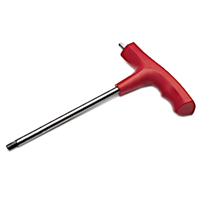
If your clinical staff only needs to perform basic adjustments—such as tightening IV pole clamps or replacing specialized screws on imaging coils—purchasing a few specific, individual tools like screwdrivers or wrenches makes sense. For in-house biomedical teams that handle comprehensive maintenance, investing in a complete toolkit ensures they are never caught without the correct non-magnetic wrench or plier.
Matching tools to your operational needs
Review your facility's daily operations. Facilities that frequently replace oxygen regulators or adjust non-magnetic wheelchairs will need a robust set of titanium or aluminum bronze wrenches. Ensure you select tools that match the specific fastener types used on your MRI accessories.
Ensuring compatibility and compliance
Always verify that the tools you purchase are explicitly marked and certified by the manufacturer as MR Safe or MR Conditional. Look for clear documentation stating the specific magnetic field strengths they have been tested against. Documentation is critical for passing facility safety audits and maintaining your accreditation.
Common Misunderstandings About MR Conditional Tools
Even among experienced professionals, confusion surrounding the difference between MRI Conditional and standard tools can lead to unsafe decisions.
“Non-magnetic means completely safe in all situations”
While non-magnetic tools eliminate the projectile risk, they can still present other hazards. For example, placing a large titanium tool directly inside the scanner bore during active imaging will severely degrade the image quality and cause major RF artifacts. Furthermore, certain tools can heat up if subjected to the scanner's radiofrequency fields during an active sequence.
Stainless steel confusion
Many people assume stainless steel is entirely non-magnetic and therefore safe for MRI. This is highly inaccurate. While some high-grade austenitic stainless steels have low magnetic permeability, many common stainless steel tools retain ferromagnetic properties due to manufacturing processes. Never assume a stainless steel tool is safe unless it is specifically tested and certified for MRI use.
Overlooking MR Conditional limitations
A lot of specialized medical equipment and tools carry an MR Conditional label. This classification means the item is safe only under highly specific conditions, such as remaining outside a specific gauss line or avoiding active RF sequences. Staff must read and understand these exact conditions before bringing the tool into Zone IV.
Final Thoughts: The Right Tools Are Not Optional in MRI Environments
The contrast between MR Conditional tools vs standard tools is absolute. One keeps your facility running smoothly and safely; the other threatens catastrophic damage and severe injury. Standard tools have a vital place in hospital maintenance, but that place ends at the door to Zone IV.
By investing in high-quality, certified non-magnetic tools, you empower your staff to perform necessary repairs efficiently, maintain strict compliance with safety regulations, and protect the immense investment your facility has made in its MRI technology.


