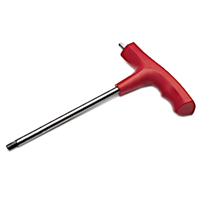

A maintenance technician steps past the Zone IV threshold to adjust a minor fitting on a patient table. A standard, MR Unsafe, steel wrench sits securely in their back pocket. They have done this job a hundred times in other parts of the hospital. But as they move closer to the scanner, an invisible force grabs hold of the wrench. In a fraction of a second, the tool rips through the pocket fabric and launches through the air, slamming into the bore of the scanner with a deafening crack.
This scenario highlights exactly what happens if you bring tools into MRI suites without verifying their materials. An MRI tool projectile accident is sudden, violent, and entirely preventable. The magnetic field of an MRI scanner is always on, and it does not forgive a momentary lapse in judgment.
For MRI technologists, radiology managers, and clinical engineers, understanding MRI tool safety is a core part of the job. You already know that the environment requires strict control. But when outside contractors, emergency responders, or even rushed internal staff enter the area, the rules can sometimes blur. This article explains the mechanics of why tools are dangerous in MRI environments, the real-world consequences of an incident, and how to maintain total safety in your facility.
Why Standard Tools Are Dangerous in MRI Environments
The core issue with standard tools is their material composition. While we interact with metal objects all day without a second thought, the MRI suite changes the rules of physics for these everyday items.
How MRI magnetic fields interact with metal tools
MRI scanners generate a static magnetic field that is incredibly powerful—typically 1.5 to 3.0 Tesla in standard clinical settings. To put that into perspective, a 1.5T magnet is thousands of times stronger than the magnetic field of the Earth. When a ferromagnetic object enters this field, the magnetic lines of force align the object's internal magnetic domains. The scanner essentially pulls the object toward the center of the magnetic field, which is the bore of the scanner. The closer the object gets, the stronger the pull becomes.
Why ferromagnetic tools pose a serious risk
Ferromagnetic materials, primarily iron, nickel, and cobalt, are highly responsive to magnetic fields. Most standard hand tools—wrenches, screwdrivers, pliers, and scissors—are forged from steel alloys that contain high amounts of iron. This makes them highly durable for mechanical work but creates a severe MRI risk. Once a ferromagnetic tool crosses into the spatial gradient magnetic field, it stops being a helpful piece of equipment and immediately becomes a hazard.
The difference between everyday tools and MR Conditional tools
Everyday tools are designed for tensile strength and affordability. Manufacturers do not factor magnetic susceptibility into their designs. Conversely, tools that are safe for use in MRI environments are specifically engineered to eliminate magnetic properties. They are classified formally as MR Conditional, meaning they pose no known hazards in all MRI environments under specific conditions. Standard tools fall strictly under the MR Unsafe category, meaning they should never cross into Zone III or Zone IV under any circumstances.
What Actually Happens When a Tool Enters the MRI Magnetic Field
Understanding the physics of an incident helps clarify why strict gatekeeping is necessary. The transition from a tool simply being pulled to it becoming a deadly weapon happens in the blink of an eye.
The projectile effect explained simply
The MRI projectile effect tools phenomenon occurs when the scanner's magnetic field exerts an attractive force on a ferromagnetic object that exceeds the gravitational force and friction holding it in place. The object is violently pulled toward the highest concentration of the magnetic field. Because the magnetic field strength increases exponentially as you move closer to the bore, the force acting on the tool increases at a terrifying rate.
How quickly tools can accelerate toward the magnet
An object does not just casually float toward the scanner. It accelerates. A heavy wrench can reach speeds that rival a fired bullet by the time it impacts the scanner housing or the bore. The spatial gradient of the magnetic field means that a tool might feel slightly heavy in your hand at the door of Zone IV, but taking two more steps forward can rip it from your grip instantly.
Why there’s almost no time to react
Human reflexes cannot compete with magnetic attraction. If a technician feels a screwdriver start to pull from their hand, their natural instinct is to grip it tighter or pull back. By the time the brain sends that signal to the muscles, the tool is already gone. There is no opportunity to catch a falling wrench or grab a runaway pair of pliers. This is why tools in MRI room protocols must focus entirely on prevention rather than reaction.
Real Risks to Staff, Patients, and Equipment
When you ask, "can you bring traditional, MR Unsafe tools into MRI room environments?" the answer is a hard no, primarily because the consequences impact human lives and multi-million-dollar equipment.
Injury risks from flying objects
The most severe risk is physical trauma. If a patient is on the table or a technologist is standing between the tool and the scanner bore, the flying object will strike them. Blunt force trauma, lacerations, and crush injuries are all documented outcomes of MRI projectile accidents. In the worst cases, these injuries can be fatal. Patient safety is the primary reason MR Unsafe items are strictly barred.
Damage to MRI systems and downtime
Even if no one is standing in the path of the tool, the scanner itself will take the hit. A heavy steel wrench slamming into the fiberglass housing or the internal radiofrequency coils can cause catastrophic physical damage. Repairing an MRI scanner is notoriously expensive. Furthermore, if the tool gets wedged inside the bore, the facility may be forced to quench the magnet to safely remove it. Quenching releases the liquid helium, shutting down the scanner and costing tens of thousands of dollars to restore.
Disruptions to clinical operations
When a scanner goes down due to an MR Unsafe tools incident, the entire imaging schedule collapses. Patients must be rescheduled, emergency scans must be diverted to other facilities, and the hospital loses significant revenue. The ripple effect of a single tool slipping from a pocket can disrupt a radiology department for weeks while repairs and safety investigations take place.
Why Common Tools Are Not MR Safe
A frequent point of friction between MRI staff and outside contractors is the misunderstanding of what makes a tool safe. Many people assume their tools are fine because they aren't "heavy duty," but the reality is much more complex.
Equip Your Team with Tools They Can Trust
Get high-quality, MRI-dedicated equipment that supports safer scans, better positioning, and smoother patient care.
View Trusted ProductsMaterials used in standard tools
Most commercial tools are made from chrome vanadium steel or high-carbon steel. These materials are cheap to produce, highly durable, and resist wearing down over time. However, they are highly ferromagnetic. Even small tools, like precision screwdrivers or utility blades, contain enough iron to become dangerous projectiles.
Misconceptions about “non-magnetic” metals
A common mistake occurs when someone claims their tool is "stainless steel" and therefore safe. While some types of stainless steel (like austenitic stainless steel) have very low magnetic permeability, many standard stainless steel tools are martensitic or ferritic, making them highly magnetic. You cannot trust a generic "stainless" label when determining MRI room tool safety.
Why visual inspection isn’t enough
You cannot look at a tool and know its alloy composition. A highly polished, non-magnetic-looking tool can still hide a steel core. Relying on visual checks or simply holding a small handheld magnet to a tool to test its pull is a dangerous game. Handheld magnets do not replicate the massive static magnetic field of a 3.0T scanner. Only tools explicitly certified and labeled for the environment should be trusted.
How MRI Non-Magnetic Tools Prevent These Risks
The only guaranteed way to perform maintenance, repairs, or clinical adjustments in Zone IV is by using purpose-built equipment.
Materials used in MR Conditional tools
MR Conditional tools are forged from specialized non-ferrous alloys. The most common materials are aluminum and titanium. These metals provide the necessary tensile strength and durability to tighten bolts and adjust equipment without interacting with the magnetic field. They are completely inert in the presence of the scanner.
Design considerations for MRI environments
Beyond the raw materials, these tools are designed for clear identification. They often feature distinct coloring, non-sparking properties, and permanent engravings that denote their MR Conditional status. This ensures that technologists and safety officers can easily verify the equipment before it crosses the threshold.
Safe use within MRI Zones III and IV
By outfitting your facility with dedicated MRI non-magnetic tools, you eliminate the guesswork. These tools can be safely stored in Zone III and carried into Zone IV without any risk of the projectile effect. They allow biomedical engineers and facility maintenance staff to do their jobs efficiently without requiring a magnet ramp-down. What tools are safe in MRI? Only those explicitly manufactured and tested to be completely free of ferromagnetic materials.
Common Scenarios Where Tool-Related Incidents Occur
Accidents rarely happen because someone intentionally ignores the rules. They happen during breaks in routine, high-stress situations, or lapses in communication.
Maintenance or repair work inside MRI areas
Facilities management teams often need to fix doors, replace lighting fixtures, or repair HVAC vents inside the MRI suite. A plumber or electrician who is not thoroughly trained in MRI safety might bring their standard tool belt into the room. If the technologist is distracted or the screening process fails, those standard tools enter the magnetic field with disastrous results.
Tools brought in from other departments
Sometimes, clinical staff from outside the radiology department need to assist with a patient in the MRI suite. An anesthesia technician or an ICU nurse might carry standard trauma shears, clamps, or a stethoscope. Because they are focused on patient care, they may forget they are carrying MR Unsafe items until the scanner pulls them away. This is another reason why having multiple layers of ferromagnetic detection and stops in your MRI Suite is important.
Emergency situations with rushed decisions
During a medical code or a rapid response, adrenaline takes over. Staff members rush into the room to stabilize a patient, bringing emergency crash carts, standard oxygen tanks, and metal tools. The urgency of the situation overrides the standard safety protocols, leading to critical projectile incidents.
How to Prevent Tool-Related MRI Incidents
Maintaining a safe environment requires a combination of strict policy enforcement, continuous education, and the right equipment.
Restricting access to approved tools only
The most effective way to prevent standard tools from entering the suite is to provide a dedicated set of MR Conditional tools that never leave the department. When maintenance staff arrive, they should be required to leave their personal tool belts in Zone II and use the facility's approved non-magnetic toolkits.
Staff training and awareness
Education must extend beyond the MRI technologists. Anyone who might need access to the suite—cleaning staff, security personnel, biomedical engineers, and rapid response teams—must undergo rigorous MRI safety training. They need to understand exactly what happens if you bring tools into MRI rooms so they respect the boundaries of Zone III and IV.
Clear labeling and storage protocols
All MR Conditional tools should be clearly labeled and stored in a designated area within Zone III. Conversely, any MR Unsafe tools required for use outside the magnet room should be heavily restricted and marked. Implementing a robust screening process using ferromagnetic detection systems at the door of Zone III can also catch errant tools before they cause harm.
Key Takeaway: One Tool Can Become a Serious Hazard
The magnetic field of an MRI scanner is invisible, silent, and always active. It does not differentiate between a life-saving medical device and a mechanic's wrench. Bringing standard, ferromagnetic tools into the suite guarantees a dangerous, high-velocity projectile event that puts patients, staff, and expensive equipment at immediate risk.
By understanding the mechanics of the projectile effect and outfitting your facility with verified MR Safe equipment, you protect your department from catastrophic accidents. Rely on strict protocols, comprehensive training, and the right non-magnetic tools to keep your imaging center running safely and efficiently.


