
A biomedical engineer steps into Zone IV to adjust a loose fitting on a patient table. They reach into their pocket and pull out a standard steel wrench they used earlier that morning in a different department. Instantly, an invisible force grabs the tool. Before the engineer can react, the wrench is ripped from their grip, accelerating through the air, and crashing violently into the bore of the 3T scanner.
This scenario happens more often than anyone in the industry likes to admit. The permanent magnetic field of an MRI scanner never turns off. It is always waiting. That persistent, powerful force means you cannot treat an MRI suite like a standard hospital room. Maintenance, routine adjustments, and emergency repairs require a completely different approach to equipment.
Understanding the behavior of tools near a strong magnetic field is a fundamental part of keeping your imaging center running smoothly. Standard tools bring an unacceptable level of risk to your staff, your patients, and your multi-million-dollar equipment. This guide breaks down exactly why MRI non-magnetic tools are strictly necessary, how they differ from the hardware you buy at a local supply store, and how to make the right choices for your facility.
Why Standard Tools Are Dangerous in MRI Suites
Bringing a standard, MR Unsafe metal tool into an MRI suite is an immediate safety violation. The physics of an MRI machine simply do not allow for everyday ferrous materials to exist safely within the same room.
How MRI magnetic fields interact with metal tools
An MRI scanner uses a massive superconducting magnet to generate a field typically ranging from 1.5 to 3.0 Tesla. To put that in perspective, a 1.5T magnet is roughly 30,000 times stronger than the Earth's magnetic field. When a tool made of ferromagnetic metal—like iron or carbon steel—enters this field, it aligns with the magnetic flux lines. The scanner attempts to pull the object directly to the center of the bore. The closer the tool gets to the scanner, the exponentially stronger the pull becomes. This is known as the spatial gradient.
The projectile risk with ferromagnetic materials
When a standard tool is pulled by the magnetic field, it becomes a projectile. The acceleration is violent and sudden. An MR Unsafe heavy wrench or a simple screwdriver can reach high speeds in a fraction of a second. This is the projectile effect. If a patient or staff member is positioned between the tool and the scanner, the results can be catastrophic. The tool will not stop until it strikes the magnet housing or the person in its path.
Why even small tools can become serious hazards
You might assume that a tiny screwdriver or a small pair of pliers lacks the mass to cause significant damage. The reality is quite different. The magnetic force exerted on an object is proportional to its mass, but a small tool flying at high speed still concentrates a massive amount of kinetic energy into a tiny surface area. Even a pocket clip or a loose screw can pierce skin, shatter plastic housing, or severely damage the delicate RF coils inside the scanner.
What Are MRI Non-Magnetic Tools?
To perform necessary work inside Zone IV safely, technicians and engineers rely on specialized equipment. These tools bypass the dangers of the magnetic field entirely.
Definition and purpose
MRI non-magnetic tools are hand tools explicitly manufactured from materials that do not react to strong magnetic fields. Their primary purpose is to allow biomedical technicians, facility engineers, and medical staff to perform maintenance, adjustments, and repairs directly inside the MRI suite without the risk of the tool being pulled by the magnet.
How they differ from standard tools
At first glance, a non-magnetic wrench looks very similar to a standard wrench. The difference lies entirely in the metallurgy. Standard tools are typically forged from high-carbon steel or chrome-vanadium alloys to maximize hardness and durability. MRI safe tools abandon these ferrous metals entirely. They are engineered to provide enough torque and durability to get the job done without interacting with the static magnetic field.
Common materials used (titanium, aluminum, etc.)
Because iron and steel are strictly off-limits, manufacturers turn to alternative metals. Titanium is highly favored because it is incredibly strong, lightweight, and completely non-ferrous. Aluminum bronze are also very common. These alloys provide excellent strength and have the added benefit of being non-sparking. High-density plastics and ceramics are also frequently used for specific applications like tweezers or small probes.
Understanding MRI Safety Classifications for Tools
The American College of Radiology (ACR) and ASTM International have established clear classifications for items entering the MRI environment. These labels must be clearly understood by anyone handling tools near a scanner.
What MR Safe means for tools
An "MR Safe" label, represented by a green square, indicates that the item poses no known hazards in all MRI environments. These items are completely non-magnetic, electrically non-conductive, and non-RF reactive. Tools made entirely of plastic or specific ceramics fall into this category. They will not pull, torque, or heat up during a scan.
What MR Conditional means in real-world use
Many non-ferrous tools MRI suites rely on are designated "MR Conditional" (a yellow triangle). This means the tool has been demonstrated to pose no known hazards in a specified MRI environment with specified conditions of use. For example, a titanium wrench will not become a projectile, but because it is conductive metal, leaving it inside the bore during an active scan could cause RF artifacts or heating. In practice, this means the tool is only safe to use for mechanical work while the patient is not being scanned.
Why some tools are completely unsafe in MRI
"MR Unsafe" items carry a red circle with a diagonal line. These are your standard steel tools. They contain ferromagnetic materials and pose a clear and present danger in the MRI environment. They must never cross the threshold into Zone IV.
Where Non-Magnetic Tools Are Used in MRI Environments
MRI non-magnetic tools are not just for specialized biomedical teams. They are required for a wide variety of everyday tasks inside the imaging suite.
Equipment maintenance and adjustments
Patient tables need calibration. Phantoms need to be positioned and secured. Head coils sometimes require minor mechanical adjustments. When a technologist or engineer needs to tighten a bolt on a patient bed while the magnet is ramped up, they absolutely must use tools that are compatible for MRI spaces, such as MRI Med’s non-magnetic tools.
Facility and construction work inside MRI areas
Sometimes the issue is not the scanner itself, but the room. HVAC vents need cleaning, overhead lights require bulb replacements, and oxygen lines need tight fittings. Facility maintenance workers often bring standard tool belts into hospitals, making them a high-risk group. Equipping your facility team with dedicated non-magnetic tools to use in Zone IV ensures that a routine vent repair does not turn into a quench-inducing disaster.
Equip Your Team with Tools They Can Trust
Get high-quality, MRI-dedicated equipment that supports safer scans, better positioning, and smoother patient care.
View Trusted ProductsEmergency situations requiring tools
During an emergency, panic can lead to critical safety oversights. If a patient is stuck or a piece of auxiliary equipment jams, staff may desperately grab the first tool they see to free them. Having a dedicated, easily accessible set of non-magnetic tools inside the suite ensures that emergency interventions do not introduce new, life-threatening projectile risks.
What Happens If You Use Standard Tools in an MRI Room
Ignoring safety protocols and introducing standard hand tools into Zone IV carries severe consequences for the facility and the people inside it.
Projectile incidents and real risks
The most immediate consequence is the projectile effect. A heavy wrench flying at 40 miles per hour toward the bore is a lethal threat. If a tool strikes a technologist or a patient, the injuries can be fatal.
Damage to MRI systems
If the flying tool misses the personnel, it will inevitably strike the scanner. The impact can easily crack the fiberglass housing, destroy expensive RF coils, or damage the internal patient table mechanisms. The physical impact is only part of the problem. A large ferrous object stuck to the magnet can disrupt the magnetic field homogeneity, requiring extensive recalibration.
Safety risks to staff and patients
Beyond the physical danger, a projectile incident causes immense psychological stress for staff and patients. It compromises the trust in the safety of the facility. Furthermore, removing a heavily magnetized tool stuck to the scanner often requires ramping down the magnet, a costly and time-consuming process that completely halts patient throughput.
Types of MRI Non-Magnetic Tools Used in Practice
Equipping your facility requires knowing exactly what types of tools are available and matching them to your operational needs.
Hand tools (screwdrivers, pliers, wrenches)
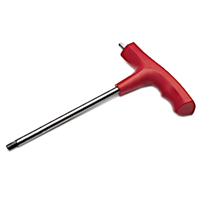
The backbone of any maintenance cart is the basic hand tool set. Non-magnetic screwdrivers (Phillips and flathead), adjustable wrenches, Allen keys, and various pliers are essential for day-to-day adjustments. These are heavily utilized by biomedical engineers doing routine PMs (preventative maintenance) on the scanner and surrounding equipment.
MRI tool kits
Instead of piecing together individual items, many imaging centers invest in comprehensive tool kits. An MRI non-magnetic tool kit typically comes in a non-magnetic carrying case and includes a standardized set of sockets, wrenches, screwdrivers, and pliers. Keeping a complete kit ensures that technicians always have the right tool for the job readily available, reducing the temptation to borrow a standard tool from another department.
Specialty and surgical instruments
Certain procedures performed under MRI guidance require specialized tools. Biopsy needles, scalpels, and surgical forceps used in interventional MRI must be strictly MR Safe or MR Conditional. These are typically made from advanced titanium alloys to ensure sharpness, durability, and absolute safety in the static magnetic field.
How to Choose the Right Non-Magnetic Tools for Your Facility
Purchasing the right tools requires evaluating your specific workflow, your budget, and the longevity of the equipment.
Matching tools to your workflow
Start by assessing who performs maintenance in your suite. Does your in-house clinical engineering team handle all repairs, or do you rely on the OEM? Does your facility maintenance team need access to the room? Buy the tools that match the specific hardware adjustments required by the tables, coils, and room fixtures.
Material considerations and durability
While non-magnetic tools are incredibly safe, they behave differently than hardened steel. Titanium is strong but expensive. Understanding the material limitations ensures your staff uses the tools properly, preventing stripped screws and damaged wrenches.
Buying individual tools vs full tool kits
If your facility only needs to tighten a specific set of plastic screws on a head coil once a week, buying a few individual titanium screwdrivers makes sense. However, if your in-house team handles comprehensive repairs, investing in a full non-magnetic tool kit is far more cost-effective and provides better coverage for unexpected maintenance issues.
Common Misconceptions About MR Safe Tools
Even experienced professionals can fall victim to dangerous misunderstandings regarding tool safety in the MRI suite.
Misconception 1: “Non-magnetic means completely safe”
Just because a tool is non-magnetic does not mean it lacks other risks. An MR Conditional aluminum wrench will not fly into the magnet, but it is still highly conductive metal. If it is left on the patient table during a scan, the RF pulses can induce currents in the metal, causing severe thermal burns to the patient.
Misconception 2: Visual inspection is enough
You cannot determine if a tool is safe simply by looking at it. Many standard stainless steel tools are polished to look identical to titanium. The only way to verify a tool is safe is by checking the manufacturer's certification and testing it with a strong handheld magnet outside of Zone IV before crossing the threshold.
Misconception 3: All stainless steel tools are safe
This is a dangerous and widely held myth. While some grades of austenitic stainless steel (like 316L) have very low magnetic permeability, many common stainless steel tools (like the 400 series) are highly ferromagnetic. Never assume a tool is safe simply because it is labeled "stainless." It must be specifically certified as MR Safe.
Final Thoughts: The Right Tools Are a Core Part of MRI Safety
Running a safe and efficient imaging center requires a culture of rigorous adherence to protocols. You cannot control the physics of the magnetic field, but you can absolutely control what crosses the threshold into Zone IV. Equipping your facility with proper MRI non-magnetic tools is not an optional luxury; it is a fundamental requirement for protecting your staff, your patients, and your equipment. Ensure your facility has the right tools on hand, train your staff to recognize the safety classifications, and never compromise when it comes to the magnetic field.


